


Challenging the Power Race
We're used to thinking that technological progress demands ever-more powerful computers, with enormous data centers consuming increasing amounts of electricity. But the team at EXO Labs has shown the opposite is sometimes possible. They connected a contemporary AI model to a machine more than 25 years old, emphasizing smart optimization over sheer computational muscle.
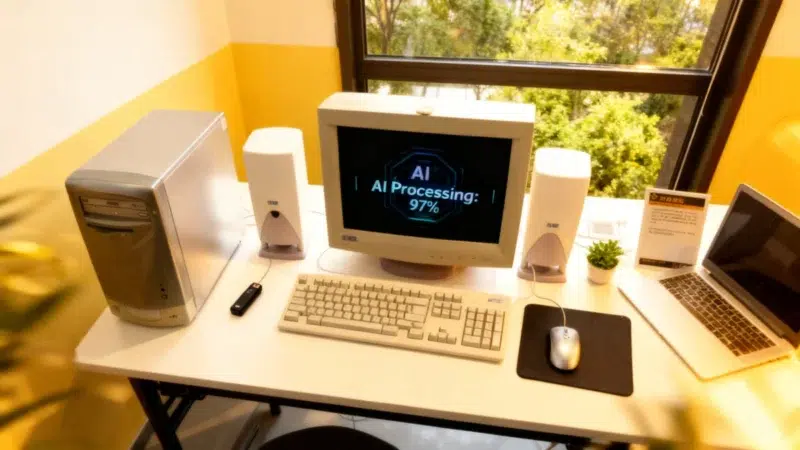
To accomplish this, the researchers at EXO Labs used a classic Pentium II processor—a piece of hardware that many may remember from their first family computer. Paired with just 128 MB of RAM, this older PC was used to run a lightweight version of the Llama 2 AI model.
Technical Ingenuity Over Raw Power
This achievement stands out even more given the huge hardware demands that modern AI models usually require. Instead of relying on state-of-the-art components or sprawling server rooms, this modest beige PC made it work. The key to their approach was a programming strategy that reduced the workload dramatically. Rather than making the outdated processor calculate data beyond its abilities, the engineers implemented a specialized software structure named BitNet. This method simplifies the neural network by using only three weight values: -1, 0, and 1.
Slow but Steady: The Vintage AI Experience
This minimalist logic eased the strain on the 1997 computer but came with one big caveat: speed. The AI responses appeared much more slowly than users of today's conversational agents might expect. Each answer formed on screen gradually, requiring a good deal of patience, but it demonstrated that this old equipment could indeed process a functioning AI model.
This surprising combination of early home computing and modern AI resonates with current cultural trends, recalling the contrasts seen in speculative fiction between aging technology and new possibilities. The EXO Labs team managed to bridge the gap with skillful software, not more powerful hardware.
Rethinking Software Design
Experiments like this encourage developers to reconsider their approach to creating tomorrow's code. Instead of always pushing for newer, faster chips, this project shows how smart software design can overcome hardware limitations—sometimes even those set by time itself.