



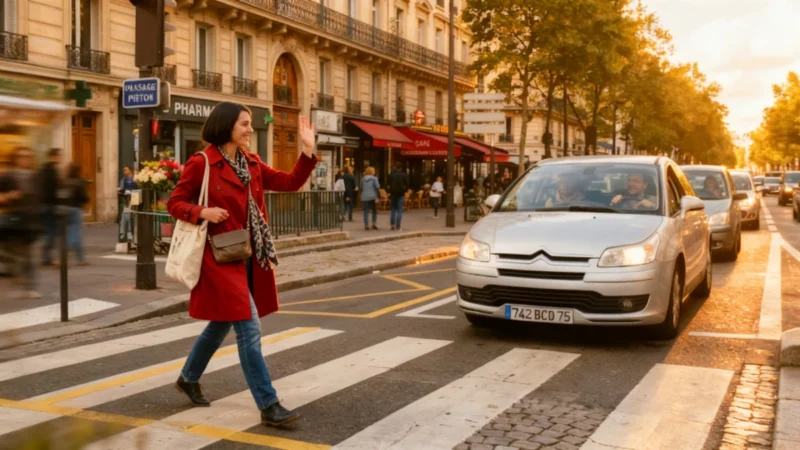
Why Do Some Pedestrians Thank Drivers?
Crossing at a crosswalk is routine, but not everyone takes the time to acknowledge the drivers who stop for them. For some people, a brief wave, a smile, or a nod comes almost automatically. Experts in social psychology have found this small act can say a lot about the person doing it.
The Brazilian outlet Minha Vida examined this behavior through the lens of psychology. According to the psychologists they cited, this gesture is more than good manners. It often reveals personality traits related to empathy, social awareness, and how someone positions themselves in relation to others.
What Does This Little Thank You Reveal?
Empathy is the first trait flagged by specialists. Pedestrians who thank drivers tend to recognize the effort or attention being shown, even during quick interactions. When a driver stops, the pedestrian sees it as cooperation. Their response—however brief—serves to confirm this positive social moment.
The psychologists quoted by Minha Vida say that this kind of behavior also shows an ability to consider others’ perspectives. The pedestrian pays attention to the fact that a driver is waiting, slowing, or making room, and they respond in kind—even if the exchange only lasts a moment.
This doesn’t mean these people are always kinder or more selfless overall. But it does suggest they value the small social exchanges that help smooth interactions among strangers.
The Role of Gratitude in Urban Life
Another key quality is gratitude. People who express thanks, even for everyday gestures, are said to build more positive and less combative social relationships. In busy city life, a nod or smile can help ease tension between pedestrians and drivers, making an impersonal situation feel a bit more connected.
The psychologists acknowledge, however, that these findings aren’t absolute. Some people thank others out of habit or because it’s what they see others do. Still, these subtle actions can reveal how we interact with others day-to-day.
Small Gestures, Meaningful Moments
In cities where getting around feels more stressful each year, small gestures like these can mean more than we might expect. They show that human connection is still possible—even during the rush of traffic.