


Believe it or not, whenever the world of technology is booming, most of us are searching for innovative solutions rather than run-of-the-mill tools. Despite this proven fact, Statista data clearly demonstrates that many customers remain loyal to their Android platforms, with about 47 per cent of the total world population still having it as a core mobile operation platform. Thus, it may seem that we are aware of every little snippet about this operating system, but things are not quite that simple.
What we like about Android is the fact that we've become accustomed to the interface, mastered gestures, and accepted that the “green robot” is simply a convenient shell for accessing social media and cameras. However, looking at trustworthy resources, you realize we're barely using 10% of the potential of what is now officially called an “Intelligent System.” Moreover, if you utilize the go-to app like Mostbet apk download, you will clearly understand that Android is fully optimized for extra features and functionality.
In this article, we won't engage into lengthy discussions on how to change your wallpaper or clear the cache; you can simply scroll the net for this purpose. Instead, we'll dive into the heart of Android 17 and subsequent iterations, evaluate the architectural changes coming in 2026, and discover why your smartphone will soon cease to be just a pocket gadget and become an autonomous digital agent.
Evolution from OS to “Intelligent System”
At last, in mid-2026, Google officially announced a paradigm shift: Android is no longer just an Operating System (OS), but an Intelligence System (IS). This bold statement has been shrouded in myths, but let’s discover what it means in practice for average Android users. Previously, the system was known to be reactive—it waited for your command. You open an app, you press a button, you search for a file. The latest generation of Android is becoming proactive, taking an initiative and taking steps towards extra functionality.
For users looking for leading-edge capabilities and craving to get the most out of their devices, it's pivotal to understand that the architecture is now built around Gemini Intelligence. This is the in-depth integration of neural network models directly into the system's core. Whereas previously, text translation or photo processing required a cloud request, chips with neural processing units (NPUs) now perform this “onboard.” This enables fast and secure app installation through optimized real-time data integrity verification algorithms, adding an extra layer of convenience to user experience.
Example: A “Smart Context” Scenario. Imagine you're chatting on a messenger about an upcoming trip which you are extremely thrilled about. Android 17, by analyzing context (confidentially, within Private Compute Core), automatically prepares a weather widget for your destination on the lock screen and offers to create a calendar event, pre-calculating the departure time and taking traffic into account. This is the “out-of-the-box” Android—a system that saves your cognitive resources and logical reasoning. By seamlessly stringing these complex micro-tasks together in the background, the operating system effectively acts as a handy digital assistant that anticipates your logistical needs before you even think to open a particular app.
Security Architecture: Atom-Level Protection
One of the most discussed topics on the Internet in 2026 was the upgraded fraud protection system. The problem of spoofing (number substitution) and social engineering reached a peak, and Google responded by introducing Fake Call Detection. By interpreting dynamic signals, the system simply checks the number against a spam list. When you receive a call that appears to be from your bank, Android makes a micro-request in the background via a secure API to the bank's official app. If the app reports that the bank has not currently initiated an outgoing call to your number, the system instantaneously terminates the connection or displays a full-screen warning: “Beware: This is not your banking institution.”
Furthermore, the concept of Intrusion Logging has been incorporated with flying colors. Interestingly, this approach was developed in partnership with human rights organizations, this feature enables hidden, encrypted logging of entire access to the microphone, camera, and file system. If spyware infects a device, the owner can conduct digital forensics and prove the hack, even if the malware tries to cover its tracks. By anchoring these cryptographic logs within a dedicated hardware security module, the system ensures that the historical records remain exceptionally tamper-proof against high-level administrative exploits. Moreover, this crucial layer of evidence empowers journalists, activists, and everyday users to establish a verifiable timeline of unauthorized surveillance for legal and defensive purposes—the feature for which the Android platform is still favored by many.
Hidden Features for Enthusiasts: Developer Options 2.0
For those who like to dig deeper, the developer settings section has become a veritable spaceship control panel. In 2026, it was updated with a continuous flow of fresh information that can make the user's journey a walk in the park. Let's break it down in more detail.
- Predictive Back Animation: Android no longer plainly shuts a window when you swipe back. It visually reveals the previous screen or desktop, allowing you to “peek” and decide whether you really want to exit. This eliminates the annoyance of accidentally closing apps at the worst possible moment.
- GPU Overdraw Visualization: A tool once used merely by programmers is now favored among geeks and gamers for optimizing battery life. By enabling it, you can see which parts of the interface are redrawing too frequently and limit their activity through appropriate system profiles.
- App Bubbles Everywhere: In Android 17, any task can be turned into a “floating window” (bubble), reminiscent of the visual aspect of Facebook Messenger. Now you can minimize a calculator, note, or music player into a small icon that will hover over all windows, providing true desktop multitasking and avoiding screen clutter.
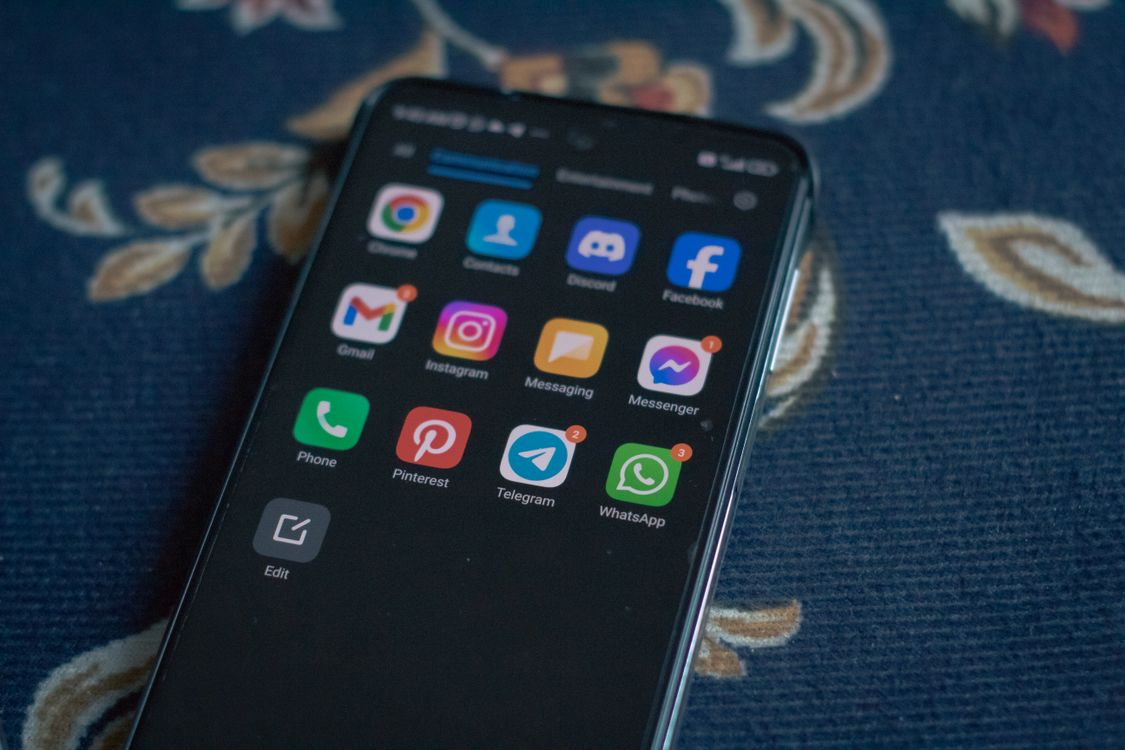
Ultimately, mastering these concealed toggles transforms habitual Android from a standardized consumer interface into a highly tailored power tool built for peak efficiency.
Multiform Factor: More than a Smartphone
The official pages of Android are actively promoting the topic of covering the system's expansion to new devices. Android 2026 isn't just about the Pixel 10 or Galaxy S26. It's about Googlebooks (the next generation of lightweight laptops), XR glasses, and in-car systems—all representing a brand-new generation of digital tech.
Android XR and Jetpack Compose Glimmer
In today's landscape, developers have gained access to an augmented reality SDK that allows users to secure the phone's interface into the user's field of view. If you're using wireless glasses (such as Project Aura), for example, Android can project navigation directly onto the road or display notifications in the corner of your field of view, giving you both effortless focus and concentration.
RemoteCompose stands out from the crowd as a state-of-the-art solution. It is designed to allow widgets on your smartphone to transmit data to a car screen or smartwatch in a lightweight format without consuming heavy energy. The widget becomes “alive”—it reacts to your movement, playing with shape and content depending on whether you're looking at it or not.
Automation via AppFunctions
In a sea of Android functions, the most exciting feature for automation fans is the upgraded AppFunctions library. For a long time, Android tried to integrate Google Assistant for app control, but it was a sluggish experience. Now, apps provide the system with direct tools (data and actions), featuring natural language descriptions.
Future example: You say, “Gemini, can you find my email receipt for last month, subtract the insurance amount, and send the result to my wife via WhatsApp?”
The Intelligence System understands this chain in the following way:
- Goes to Gmail (via AppFunctions).
- Analyzes the PDF.
- Performs the calculation.
- Opens WhatsApp and composes the required message.
In addition, all this structure happens without you manually switching between four apps.
Economy and Performance: A System That “Learns” to Save
In 2026, Android introduced Dynamic Resource Steering technology. Within it, the system analyzes device usage patterns over the past 30 days. If you typically open Instagram at 8 AM and your banking app only on Fridays, Android “freezes” unnecessary processes at the kernel level, freeing up RAM and reducing CPU load. This has resulted in even mid-range devices lasting 20-30% longer on a single charge. On top of that, Android no longer drains battery power in the background—it maintains a deep hibernation state for everything that doesn't matter at the moment.
Bottom Line
If previously Android interface was seen as a set of icons, today, this is a highly smart and complex mechanism that combines artificial intelligence, unprecedented security, and flexible customization to match any assignment. Through it, we can see how the line between a mobile device and a fully-fledged personal assistant is blurring. Consequently, the system is becoming transparent, secure, and, most significantly, human-centric. We're no longer learning how to use Android—Android is learning how to give us a helping hand. This is just the beginning of a digital journey where your smartphone is not just a screen in your pocket, but the intellectual core of your cyber existence.