




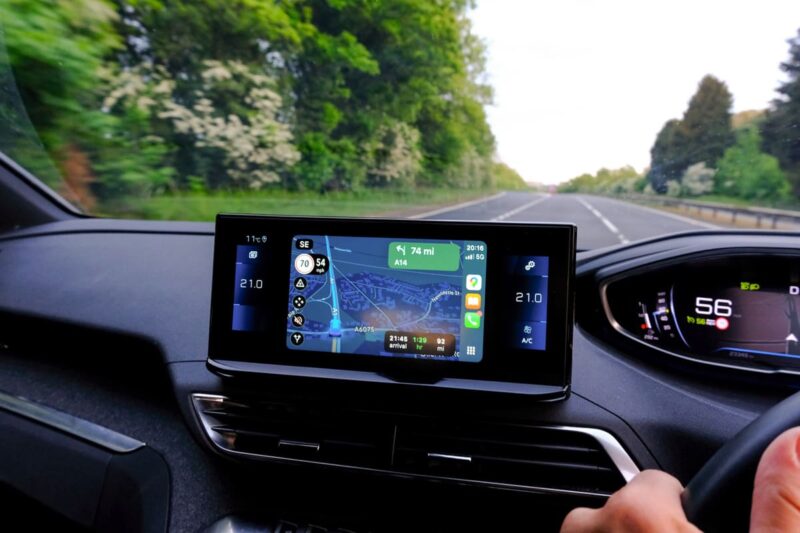
Why Are Routes Changing?
If you regularly use Waze or Google Maps in France, you may have spotted a recent change: instead of prioritizing the fastest route, the apps now favor trips with a lower environmental impact. This isn’t a fluke or a new preference setting—it’s a result of a government decree, according to reporting by Le Journal du Geek.
French governmental decree no. 2022-1199 requires digital navigation services to highlight the least polluting routes. Now in force, the rule makes it mandatory for these apps to put eco-friendlier itineraries front and center.
“Digital services that aim to facilitate multimodal travel must highlight route recommendations with the lowest impact in terms of greenhouse gas emissions.”
The law also specifies that if a suggested route includes any portion with a speed limit over or equal to 110 kilometers per hour (about 68 mph), the app must also offer an alternative route where the speed is reduced by about 12 mph (20 km/h), down to 90 kilometers per hour (about 56 mph).
Benefits—and Dissent
For users of Google Maps and Waze, this change is supposed to bring environmental benefits. Drivers can see their carbon footprint for each trip and opt for cleaner routes to help reduce CO2 emissions. But there’s a catch: these routes are often slower, leading to user frustration. Online comments show that plenty of people aren’t pleased about sacrificing travel time for greener driving.
Even so, these apps aren’t locking users out of the faster route option entirely. If you prefer speed over environmental impact, you can still switch your settings back to the quickest route available.
A Special Situation: Île-de-France & the Olympics
Le Journal du Geek noted that ahead of the 2024 Paris Olympic Games, authorities in the Île-de-France region asked Google Maps to adapt its recommendations. The goal was to steer drivers toward alternative routes to reduce potential traffic jams during the influx of visitors.
The “Île-de-France Mobilités” app, on the other hand, was designed to ease congestion and limit traffic, so it suggests routes that may not be the fastest for individuals but serve the overall good of the region’s residents and drivers.
A Matter of Public Safety?
Laurent Probst, general director of the Île-de-France transport authority, told Ouest-France:
“If they don’t comply, the State will have to take necessary action. We’ll ask them to shut down their app. This is a matter of public safety.”
This underscores the tight balance navigation platforms must strike between driver convenience, environmental responsibility, and public safety.
Have you noticed these changes on Waze or Google Maps in France? Do you prefer the eco-friendly routes or the old fastest route system? Share your thoughts below.


Makes sense. If everyone uses the shortest route, they get jammed with traffic and end up taking longer. Shortest ≠ quickest.
The slower way usually is twistier. Twisty roads have altitude changes. These lead to a lot more acceleration and more fuel consumption. Keeping a steady speed just has to overcome friction.
just wait. the big push for electric vehicles tied to the grid are so governments will decide when, where, and IF you drive at all how fast you will be allowed to. Guaranteed. Government will control all of our movements and then decide which of them can be taxed.
nobody asked for this. can we go back to having governments that do what regular people care about rather than their elitist agenda that never affects those who impose it? they want us to follow their rules and often pay more to do it while they sidestep those same rules.
Yes I did notice it and no I don’t like it
well, in Italy it only proposes the routes with Tolls, unless you remove the option in settings, no toll free alternatives until you are midway your route…
Yes its in the settings but it indicates it will suggest fuel-efficient routes by default when arrival times are similar. It’s been running but I haven’t noticed it selecting a longer route yet. In any case, it always shows multiple routes so it’s easy to select the one you prefer. I wonder if the algorithm is different for EV’s?