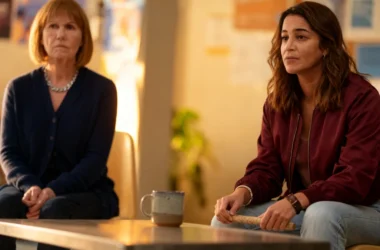




Three decades after her breakout role in the '90s box-office hit Kiss the Girls, Ashley Judd is re-examining the film—and what she sees now is deeply unsettling. The actress recently spoke out in an Instagram video (cited by Variety), urging fans to reconsider the entertainment value of stories that feature violence against women, especially when the trauma portrayed reflects painful realities.
Ashley Judd Reflects on the Legacy of Kiss the Girls
In her Instagram post, Judd described how her relationship with the 1997 crime thriller Kiss the Girls (released as Le Collectionneur in France) has changed over time. She noted her evolving concerns, particularly regarding how the film presents violence against women.
“Kiss the Girls is centered on male sexual violence and the torture of women’s bodies.”
Judd acknowledged that, when the film was made, such stories were often told from a perspective of female resilience—celebrating the strength to survive horrific ordeals. “Many people still say that's how the movie interprets it,” she wrote. “But now I ask a different question: why is sexual terror against women packaged as entertainment? Why is it profitable?”
The Story and Its Stars
Directed by Gary Fleder, Kiss the Girls was adapted from James Patterson's 1995 novel. Morgan Freeman played forensic psychologist Alex Cross, with Judd starring as a doctor and kickboxer kidnapped by a masked serial killer called Casanova.
Gratitude with a New Perspective
In her video message, Judd expressed thanks to fans for the film’s impact on her career:
“Thank you for loving the film, thank you for loving me in it,”
she said. “Thank you for making it such a… I was going to say important, but actually a turning point in my career.”
At the same time, she stressed how her view of the film had grown more complicated:
“I want to talk about the film from an angle that has become clearer to me with the years, and invite you to think about it yourself. It’s perfectly normal to love this movie or tell me it’s your favorite,”
Judd continued, but pressed further: “Why is it considered entertaining to depict male sexual violence and the torture of women’s bodies?” She pointed out the movie’s inclusion of what she described as
“very misogynistic dialogue,”
which she called
“absolutely unacceptable.”
Entertainment or Exploitation?
Judd pushed the critique further, questioning the foundations of the movie:
“It’s resilience after male sexual violence. It’s resilience after sexual tortures inflicted on women's bodies by men, and I wonder… why is this entertainment? Why is this a capitalist venture? Why are we making entertainment and money from such subject matter?”
She warned that while audiences often focus on her character’s resilience, there is little pause to consider why stories like this center trauma—or the effect of seeing such trauma again and again.
“We value the resilience of my character in the film, but we don't necessarily analyze or take a step back to understand why we tell these stories—which are traumatizing. For me, it's not entertainment. It's collective denial… making entertainment from sexual terror.”
Box Office Numbers and Open Questions
Kiss the Girls grossed $60 million worldwide for Paramount Pictures in 1997, on a budget just under $30 million. Morgan Freeman returned as Alex Cross in the 2001 sequel, Along Came a Spider, which earned $105 million globally. The commercial success suggests that audiences have shown strong interest in such thrillers, even as their legacy grows more complex.
Judd emphasized that it's entirely normal for people to have enjoyed the film or even consider it a favorite, but she encouraged viewers to ask uncomfortable questions—about why this form of trauma is marketable, and at what cost. Those are the questions she now invites her audience to reflect on, three decades later.