



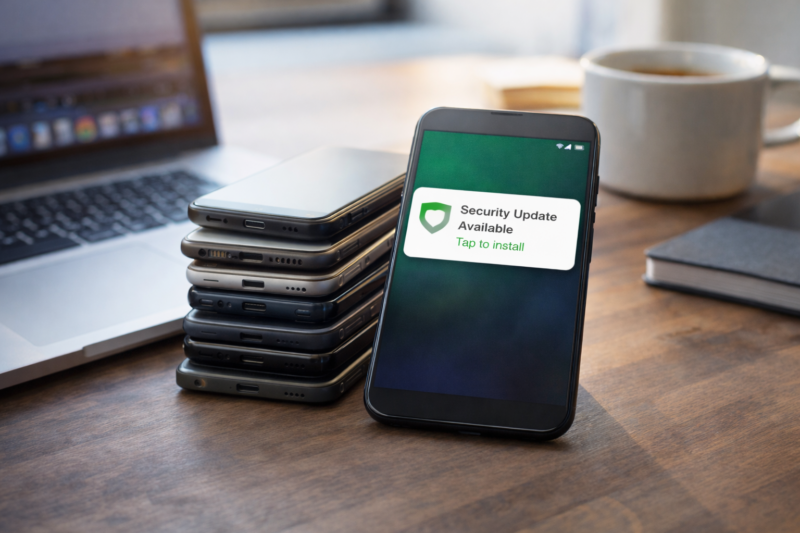
Recent reports indicate that more than one billion Android devices worldwide are no longer receiving security patches. It’s an alarming number — but it’s not surprising.
The real issue isn’t a sudden vulnerability. It’s lifecycle economics.
Design & Build
Budget Android phones are often built to hit aggressive price targets. This results in shorter support windows, lower-margin hardware, and limited long-term update commitments from manufacturers.
For consumers, a $200/£150 phone appears to offer excellent value. Two years later, it may be running outdated software with no patch coverage.
Software Support

Google has extended update promises for its Pixel devices, and companies such as Samsung have improved dramatically. But across the wider ecosystem, fragmentation remains a structural issue.
Older devices running outdated versions of Android create a large attack surface. Even if the user experience still feels smooth, security exposure quietly increases.
Performance vs Protection
For many users, a phone that “still works fine” doesn’t feel obsolete. Apps launch. Messages send. Photos upload.
But security patches operate invisibly. When they disappear, the risk doesn’t announce itself.
That disconnect is the heart of the problem. Consumers rarely evaluate software support the same way they evaluate battery life or camera quality.
The Bigger Question
Should budget phones be required to carry minimum support guarantees? Regulators in some regions are beginning to look at right-to-repair and longevity standards.
Until then, buyers need to factor update commitments into purchasing decisions — especially as smartphones become primary financial and identity devices.
Verdict
The billion-device headline sounds dramatic, but it reflects a long-standing tension in Android’s ecosystem.
Affordable hardware democratized smartphones. Now the industry must reconcile price accessibility with long-term digital safety.
Because security doesn’t expire gracefully.