



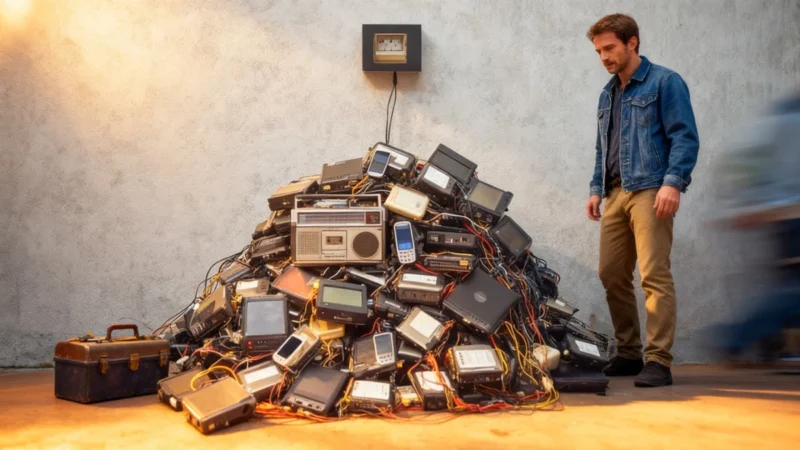
Imagine powering your home year after year with hundreds of old laptop batteries—sounds like sci-fi or the ultimate recycling project? For one dedicated energy enthusiast, this idea has not only become a reality since 2016, but it's still running as smoothly as ever. Let’s peek inside a decade-long journey where tech junk meets off-grid ingenuity.
When Innovation Meets Sustainability
In a world where innovation and sustainability go hand in hand, one passionate advocate for energy independence found an unusual way to turn technological waste into, quite literally, a wellspring of power. Since 2016, he’s been keeping the lights on at home using a steadily growing stash of over 650 recycled laptop batteries—a feat that showcases the hidden potential lurking in forgotten resources.
The Beginnings of an Ambitious Project
The context is more relevant than ever: as both companies and everyday folks fret about keeping their tech powered up, innovation has become a necessity. Among the most promising advances, some batteries now claim to run devices for decades without recharging—but our hero decided not to wait for the future. Instead, he embarked on a bold DIY experiment: building a home energy system from over 1,000 used laptop batteries, gaining freedom from the traditional power grid in the process.
His setup lives in a shed about 165 feet (that’s roughly 50 meters for our metric friends) from his main house. This shed is the beating heart of the operation, where old batteries team up with solar panels to generate reliable, off-grid power. And while it might sound a bit unconventional (or like the start of a science experiment), the system has chugged along without any major mishaps for almost a decade. In fact, he proudly reports,
“I haven’t had any fire incidents or swollen batteries”—a testament to just how solid his design really is.
Designing for Reliability—and Overcoming Hiccups
Launched in November 2016, the project grew out of his earlier attempts to generate some electricity with solar panels, an old forklift battery, charge controllers, and an inverter. He started with those first 650 batteries, built a shed, and got to work building battery packs at 100 amp-hours each. Copper wiring—a savvy choice—helped ensure long-lasting, efficient connections throughout the system.
Of course, every ambitious project hits a few speed bumps. The early days were plagued with technical hurdles, like the batteries discharging at uneven rates. The solution? A hands-on approach: he balanced the batteries and added more cells whenever needed. Instead of just using whole batteries, he cracked them open, took out the individual cells, and organized them into custom racks. This technical tweak not only maximized efficiency, but also prolonged the life of the entire setup.
Over the years, the installation grew to feature 24 solar panels, each pumping out 440 watts—boosting the home’s energy production even further. Thanks to these upgrades, the system has run without interruption since 2016. What’s even more impressive: he hasn’t had to replace a single battery cell, proving just how robust and reliable this approach has been. Along the way, he’s demonstrated an added bonus—the value of repurposing electronic waste, turning obsolete components into precious resources.
Going Beyond Personal Success
This story isn’t just about one person’s triumph; it sparks a bigger conversation about the future of energy independence. It urges us to rethink how we consume energy and to explore sustainable, innovative alternatives. As environmental and economic pressures nudge more and more people toward breaking up with traditional energy sources, this project might just inspire others to roll up their sleeves and try something similar.
In the end, our protagonist’s experience stands as a shining example of human creativity and adaptability in a world where energy is rapidly becoming a vital concern. His setup not only covers his own power needs, but also opens up new perspectives for reusing existing technologies in sustainable ways. At a time when transitioning to clean energy is more relevant than ever, his project shines as an inspiration for anyone looking to blaze their own trail to energy autonomy.