



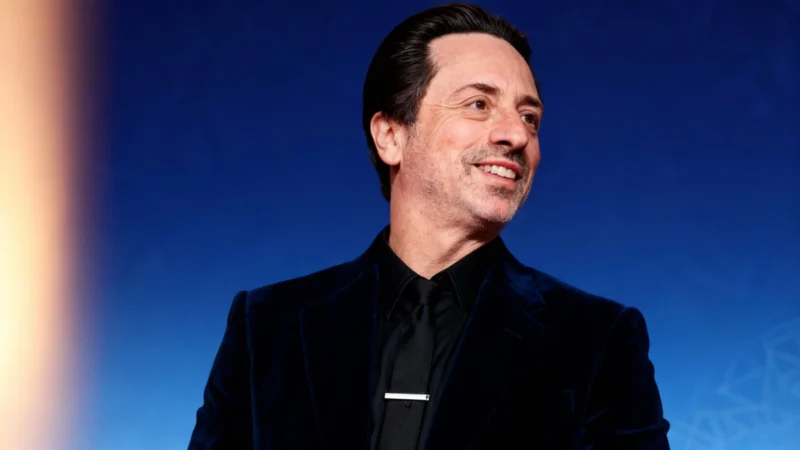
When ChatGPT dropped in late 2022, the ripple it sent through Silicon Valley was impossible to ignore—especially at Google, a company that suddenly looked, well, a little flat-footed. But from this moment of surprise, a familiar (yet unexpected) face emerged at the heart of Google's renewed AI ambitions: Sergey Brin.
From Cozy Retirement to the Heart of the AI Storm
You'd be forgiven for picturing Sergey Brin, co-founder of Google, enjoying a peaceful retirement—a life filled with coffee, theoretical physics, and marathon reading sessions in sun-drenched cafés. And indeed, Brin himself imagined just that. As he shared during Stanford’s 100th anniversary, retirement was planned as an intellectual break, with science and books as his closest companions.
Then came the pandemic, and with it, a dramatic detour. Suddenly stripped of his carefully curated routine and the cerebral atmosphere of Google’s campus, Brin found himself in a self-professed “decline.” So when the company allowed certain employees to trickle back to the office, he didn’t have to be asked twice—he was there, as if no time had passed, ready to reengage.
Jumpstarting Google’s Technical Mojo
By 2023, Brin was doing much more than checking in. He was present several days a week, rolling up his sleeves alongside the research teams, diving headfirst into scientific discussions, and even weighing in on hiring decisions. This wasn’t a ceremonial return; it was a hands-on, sleeves-rolled-up re-entry, catalyzed by two things: the itch for technical creation and a mounting realization that Google needed to pick up the pace. Fast.
Brin’s candid self-reflection today includes a healthy dose of self-critique. Despite Google's release of the groundbreaking Transformer paper in 2017—a foundation stone of modern AI—the company hadn’t invested enough in scaling that technology. While Google treaded cautiously, worried about chatbots bungling answers or making awkward missteps, OpenAI took a bold risk with ChatGPT, throwing it into public hands and sparking an explosion of users worldwide.
Regret, Resources, and the Race to Catch Up
According to Brin, this hesitation proved costly, at least in terms of public perception. The irony? Google had all the right cards: the deep learning research pedigree, extraordinary computing power, specialized chips, and unmatched mastery of giant data centers. Everything, it seemed, except for the leap of faith.
- Years of deep learning research
- Unique, high-caliber computing infrastructure
- Custom chips and unrivaled data center expertise
All this, and yet, a sense of hesitation let OpenAI claim center stage. Now, Brin’s role at Google goes way beyond dispensing advice from a distance. By 2025, he’s not shy about advocating for a more demanding work culture—pushing for daily office presence and weeks crammed with activity. The tone? Less “move fast and break things,” more “move consistently and catch up.” It’s an undercurrent of urgency that’s animating Google today.
Gemini and a New Era: No More Spectators
As 2026 comes into view, Google’s Gemini project stands as a poster child for this revitalized momentum. Brin openly states that much more advanced Gemini versions are already in use behind the scenes—even accessible to him on the go—far beyond what the public has seen so far.
But his return is more than just about the latest model; it’s a statement in itself. Brin’s involvement shows Google isn’t content to remain on the sidelines of the generative AI revolution. Instead, one of its most storied founders is now steering the ship directly into the storm, determined to ensure Google doesn’t watch this technological upheaval from the back row.
Conclusion: Sergey Brin’s return is more than a footnote in Google’s story. It’s a rallying flag for technical creativity, bold moves, and, let’s be honest, a little old-fashioned hustle. The message is unmistakable: sometimes, saving the future means coming out of retirement, trading the quiet of cafés for the energy of the lab—and reminding everyone that even tech giants can race to catch up when the stakes are as high as AI.