




Snake's path to becoming a mobile gaming icon began in 1997, when Finnish developer Taneli Armanto programmed it for the Nokia 6110. Pre-installed on an estimated 350 million Nokia devices worldwide by the mid-2000s, Snake rapidly became one of the most widely played mobile games in history and helped cement Nokia's 14-year reign as the world's leading phone manufacturer.
Today, browser-based versions, particularly those found on the browser gaming site Poki, maintain the game's legacy of simple, accessible play without requiring downloads or installations. We’ve teamed up with Poki to look at the full history of where the game has come from, and where it finds itself today.
Snake Games – What They Are & Why They Matter
Snake games are arcade-style games in which players control a continuously moving line, collecting objects to grow longer while avoiding walls and their own body. The concept dates back to the 1976 arcade game Blockade and appeared on early computers and calculators throughout the 1980s before Armanto adapted it for Nokia devices.
Their timeless appeal lies in their simplicity: easy-to-understand mechanics, brief play sessions, and instant restarts create a frictionless loop that fits naturally into short breaks.
This design philosophy resonates with modern mobile gaming behavior. At Poki's snake games page for example, you'll find modern interpretations of the classic formula that continues to demonstrate how this concept continues to evolve for today's browsers.
Enduring Appeal
Millions of people were first exposed to mobile entertainment through Snake long before there were app stores, which is why it is still iconic. The game's design, brief rounds, no pressure, and quick restarts fit the preferences of modern mobile gamers. According to a statistic from SQMagazine, 51% of mobile gamers worldwide resort to mobile games, especially during waiting periods, mirroring exactly how Snake was first enjoyed in fleeting, everyday moments.
This enduring play pattern both supports and explains why Snake continues to appear on new devices, generation after generation. Whether played on a keypad, touchscreen, or web browser, Snake remains instantly recognizable, responsive, and inherently replayable.
Snake's Technical Evolution
Early Nokia models were constrained by limited processing power and monochrome screens, but Snake's minimalist design worked perfectly within those constraints. As smartphones emerged in the 2000s, Snake evolved with touchscreen controls, color graphics, and varied gameplay modes.
The shift to browser-based gaming platforms introduced new possibilities such as smoother animations and higher frame rates, colorful environments and visual themes, multiplayer variations, and even social features like leaderboards and challenges.
These updates modernized the Snake formula while preserving the core mechanic's simplicity that made it iconic. The story of how mobile gaming matured alongside Snake can be even further explored through the best Android games, which are still shaping today's mobile ecosystem, showcasing the shift in mobile gaming.
Why Snake Games Fit Today's Browser-Based Gaming Culture
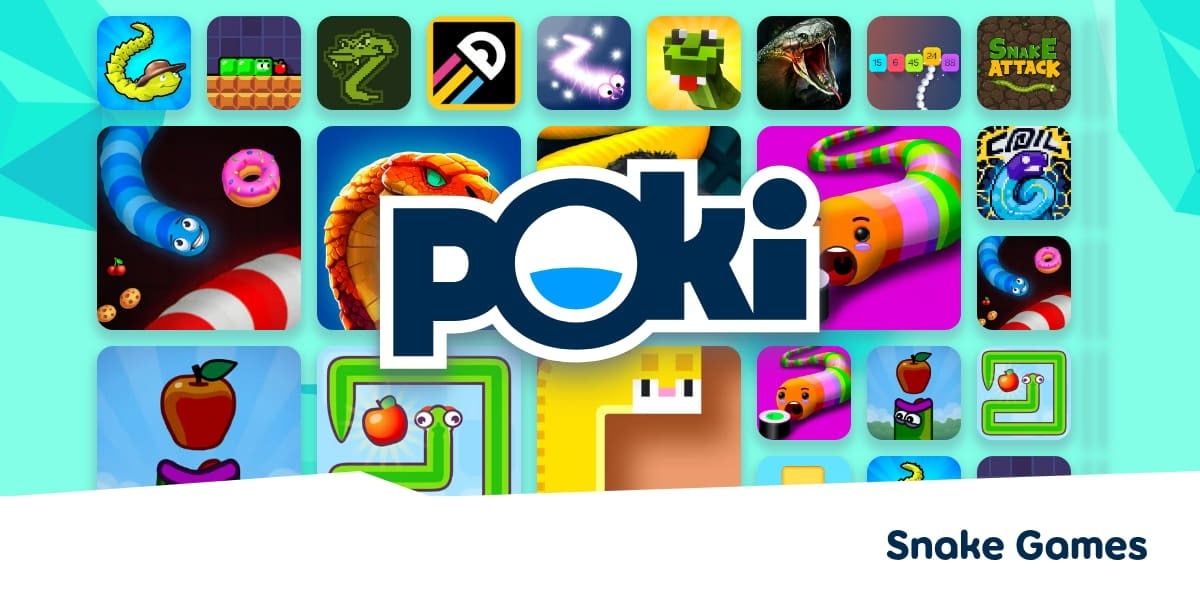
Browser gaming has emerged as one of the fastest-growing entertainment categories thanks to accessibility, device compatibility, and zero installation requirements. Poki's approach mirrors these trends by offering instant-play Snake games across PCs, tablets, phones, and Chromebooks. Players can start immediately with no login or download required; exactly the frictionless experience that early Snake players appreciated.
This accessibility also aligns with broader mobile esports trends. While Snake isn't a professional esports title, the mobile gaming sector as a whole continues to expand. According to industry data, mobile esports accounts for 38% of total esports revenue, underscoring the influence of casual, mobile-friendly games on player behavior and industry growth.
Market Demand for Lightweight, Replayable Games
The rise of hyper-casual gaming closely mirrors the Snake formula: quick, skill-based, and infinitely repeatable. Moreover, Snake games remain popular because they don't demand sustained commitment, placing them alongside other browser and mobile games that dominate short-session play.
Several reports on gaming consumption trends support this direction, showing how hyper-casual games, which share Snake's instant-play DNA, have become one of the dominant forces in mobile gaming. Their success demonstrates ongoing demand for games that deliver immediate satisfaction in brief moments, exactly what Snake pioneered nearly three decades ago. Additionally, market data shows that fast-paced, accessible gameplay remains central to mobile gaming's success in 2025, echoing the design principles that made Snake a phenomenon decades earlier.
The Future of Snake Games: Growing Browsers, Growing Nostalgia
Snake's evolution demonstrates how classic games can adapt to new technology without losing their core appeal. With improvements to the design, browser-based accessibility enables both desktop and Android gamers to revisit nostalgic gaming experiences, with this iconic game serving as a prime example.
Snake is growing rather than fading into the past thanks to sites like Poki that support fresh versions from independent and single-developer producers. Snake will remain popular across browsers and mobile devices as long as players are drawn to straightforward, responsive, and easily accessible game mechanics.

