




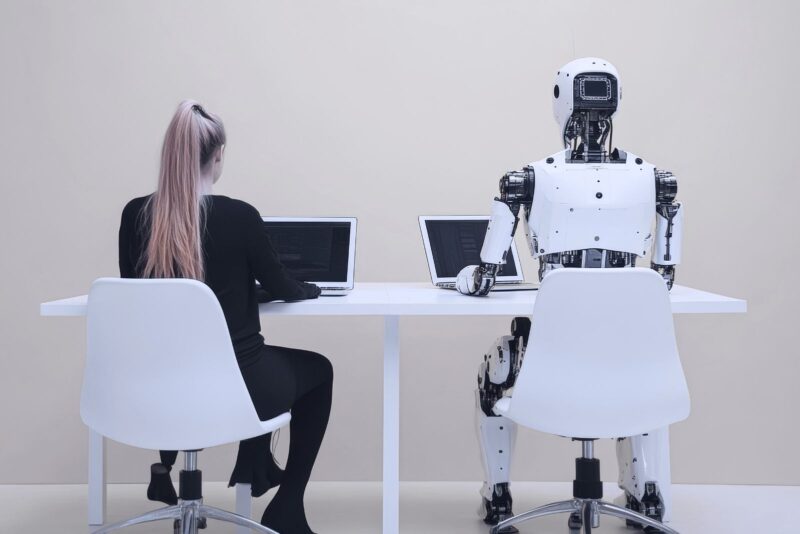
OpenAI has quietly stepped back from one of its most ambitious projects: building a tool capable of reliably spotting whether a piece of writing was produced by a human or by artificial intelligence. The company revealed in late July that it was halting development after struggling with one stubborn problem — the tool wasn’t accurate enough.
An ambitious idea that never quite worked
When ChatGPT arrived in late 2022, it didn’t just shake up the tech world; it sent shockwaves through classrooms, governments, and newsrooms. Suddenly, anyone could generate essays, analyses, emails, or poems that read convincingly human. Naturally, concerns followed: teachers worried about plagiarism, regulators pushed for transparency, and researchers began asking the same question: Can we reliably tell who—or what—wrote a text?
OpenAI hoped the answer would be yes. In January 2023, it launched the OpenAI AI Text Classifier, designed to judge whether a given text was “doubtful,” “unlikely,” “uncertain,” “possible,” or “likely” to be written by an AI. But from the start, accuracy was a problem. According to OpenAI, the classifier identified AI writing correctly only 26 percent of the time — hardly reassuring for schools, journalists or policy makers hoping for a clear signal.
Even more concerning was the reverse: the tool frequently mislabeled human writing as machine‑generated. For anyone whose work depends on trust — students, writers, professionals — that’s an error with real consequences.
Why the project stalled
Despite early optimism, OpenAI eventually concluded there wasn’t a safe or reliable way to improve the tool’s performance. As the company explained, when discontinuing the classifier, meaningful upgrades weren’t materialising. The precision remained too low to be useful, and false positives were still far too common.
OpenAI now says it is “actively exploring more effective provenance techniques” to help identify whether audio, visual, or text content comes from AI systems. In other words, rather than guessing based on writing style, future tools may rely on digital signatures or embedded markers—an approach that researchers at organisations such as the OECD and the National Institute of Standards and Technology (NIST) have also highlighted in recent reports.
The challenge isn’t trivial. As AI models become more fluent, less predictable, and more human‑like in tone, distinguishing them from human writing grows harder. Even experts often fail blind tests. And if humans can’t reliably spot AI writing, asking a machine to do better is no small task.
A setback for regulation and transparency
The timing is awkward. Around the world, policymakers are scrambling to regulate artificial intelligence — from the EU’s AI Act to US proposals supported by the Federal Trade Commission (FTC). Many of these frameworks rely on transparency mechanisms: clearly labelling what’s AI‑generated, identifying potential misuse, and preventing misinformation.
Without dependable detection tools, that mission gets harder. Schools hoping to identify AI‑written homework, newsrooms checking the authenticity of sources, or platforms battling fake content all now face the same uncomfortable reality: even the creators of ChatGPT can’t reliably tell what their own system has written.
So, where does this leave us?
For now, the company behind the world’s most famous AI model admits it cannot solve the detection puzzle — at least not with current approaches. It’s a reminder that artificial intelligence evolves faster than the tools meant to regulate it. And while OpenAI says it remains committed to transparency, the road ahead is still blurry.
One thing is certain: as AI systems continue to improve, the ability to distinguish between humans and machines will only become more critical. But at least for now, the distinction remains surprisingly hard to spot — even for the people who built the technology.

