




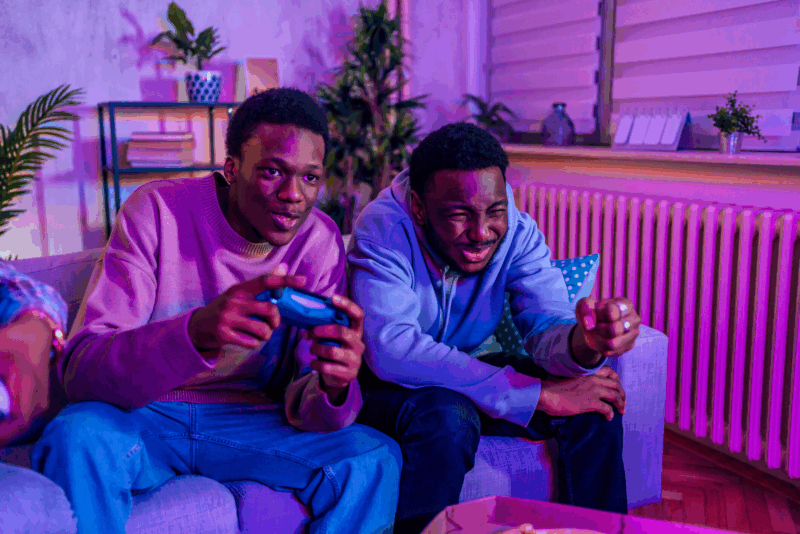
Ever found yourself completely glued to a video game, eyes wide, heart racing, palms sweating—only to realise hours have passed in what felt like minutes? You’re not alone. While the addictive pull of gaming has long puzzled researchers and parents alike, a new study suggests our brains might be playing tricks on us—and it’s not just about willpower or screen time.
Your brain reacts to games like real life
During a recent summer study, a team of scientists from the Salk Institute in California, in collaboration with Chinese researchers, monitored the brain activity of 200 volunteers while they played different video games. These weren’t complicated open-world quests or violent shooters—just simple, even silly games like Flappy Bird, Space Escape, and one involving a toy crocodile with snappy teeth.
What they discovered was striking. In each case, when players encountered a critical moment—say, the bird crashing into a pipe or the crocodile snapping shut—their brains triggered a P300-CE response. That’s a particular neurological reaction that typically happens around 300 milliseconds after a sudden or significant event.
Why is that so important? Because the P300-CE signal also fires in real-life situations that involve risk, danger or decision-making. In other words, your brain doesn’t seem to know whether it’s facing a digital obstacle or an actual one—it reacts the same way.
The line between game and reality is thinner than we think
This blurring of lines between fiction and reality might help explain why some people struggle to step away from their consoles. When a game presents challenges that the brain perceives as real, it becomes far more engaging and immersive. It’s not just “fun”—it feels meaningful. The stakes feel high, even if you’re guiding a pixelated bird through cartoon pipes.
According to the study’s authors, this could be one of the core reasons video games are so compelling—and sometimes addictive. “Well-designed games simulate semi-realistic scenarios that trick the brain into activating its critical event system,” the researchers explained. “This may contribute to the highly engaging and addictive nature of games.”
Addiction or just clever design?
Of course, it’s not as simple as blaming a brain signal for every gaming binge. Plenty of people enjoy games without becoming dependent, just as plenty of people can enjoy a glass of wine without it turning into a problem.
But understanding this neural response offers a fascinating new angle. It suggests that the reason games can feel so intense, even when we know they’re fictional, is because they hijack the very system our brains use to respond to the real world. That thrill you feel when you narrowly avoid disaster in-game? It’s not just you being dramatic—it’s your brain reacting to what it sees as a genuine near-miss.
So what can we do with this knowledge?
This research won’t solve video game addiction overnight, but it does give us a clearer picture of what’s happening behind the screen. Whether you’re a parent worried about your child’s screen time or a gamer trying to balance your hobby with the rest of life, recognising the psychological mechanics at play can help.
Next time you find yourself hooked, it might help to remember: your brain is wired to take those on-screen moments seriously. That doesn’t mean you have to stop playing. But maybe, just maybe, it means you should hit pause more often than you think.

