





Google's AI Mode has arrived in the UK, threatening to devastate publisher revenues. The search giant's most advanced AI experience yet provides detailed, comprehensive answers that keep users locked within Google's ecosystem, potentially eliminating the need to visit original content sources. Publishers across Britain are sounding the alarm as this rollout could obliterate the click-through traffic that sustains their advertising-dependent business models, marking what many fear is the beginning of the end for independent web publishing.
Revenue Apocalypse: Publishers Face Extinction as AI Takes Over Search
The numbers tell a terrifying story. Mail Online has already witnessed a catastrophic 56 percent drop in click-through rates for their top keywords since Google's AI features began appearing in search results. Industry data reveals even more devastating losses, with some publishers experiencing up to 80 percent reductions in search-driven traffic. These aren't minor fluctuations. They represent an existential crisis for content creators who have built their entire business models around Google's referral traffic. When users get comprehensive answers directly from AI overviews, why would they ever click through to the original source? The answer is increasingly clear: they won't.
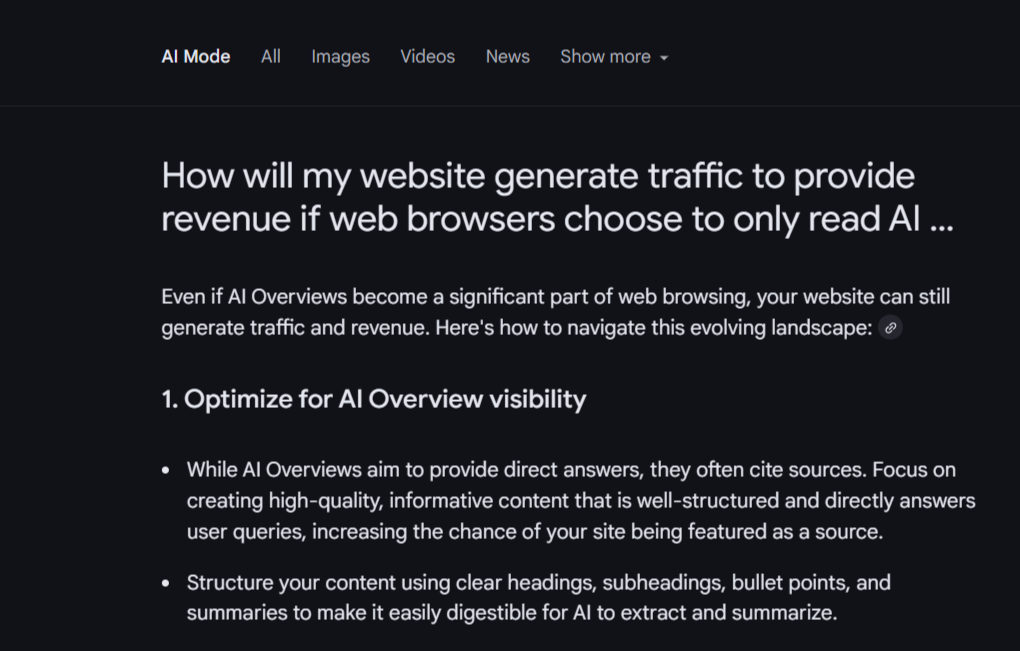
Google's AI Mode: The Final Nail in the Publisher's Coffin
Google's AI Mode, powered by the sophisticated Gemini 2.5 model, represents the most advanced threat to publisher survival yet deployed. The system breaks complex queries into multiple sub-searches, scraping content from across the web to synthesize comprehensive responses that eliminate any incentive for users to visit original sources. Available across desktop, Android, and iOS platforms, AI Mode supports text, voice, and image inputs, creating an all-encompassing search experience that traps users within Google's walls. Publishers who spent decades building audiences and creating valuable content now watch helplessly as their work gets repackaged and served without compensation. The multimodal capabilities mean even visual content creators face cannibalization as AI systems digest and redistribute their intellectual property.
The Death of the Open Web: How AI Overviews Destroy Content Economics
The fundamental economics of web publishing are crumbling. Publishers rely on a simple equation: create valuable content, attract visitors through search, monetize through advertising. Google's AI overviews have shattered this model by providing users with extracted information while keeping them on Google's platform. This isn't just about reduced traffic. It's about the systematic destruction of the revenue streams that fund journalism, research, and original content creation. Independent outlets that cannot afford to operate at a loss are already closing. Those that remain are desperately seeking alternative revenue sources as their Google-dependent income evaporates. The ripple effects extend beyond individual publishers to threaten the diversity of voices and perspectives that define the open internet.
Google's Hollow Promises: Why Publisher Partnerships Mean Nothing
Google claims AI Mode will drive “quality users” to publisher sites through embedded links within AI summaries. These assurances ring hollow when confronted with actual traffic data showing precipitous declines across the industry. The tech giant argues that clicks from AI overviews are more valuable than traditional search clicks, but this misses the fundamental point: there are dramatically fewer clicks overall. When AI provides complete answers, users have no reason to seek additional sources. Google's positioning of this as beneficial partnership feels insulting to publishers watching their livelihoods disappear. The company's defense that they highlight sources is meaningless when those sources see their revenue streams dry up regardless of attribution.
Content Creators Face Impossible Choices as AI Consumes the Web
Publishers now confront an impossible dilemma. Blocking Google's AI crawlers means losing all search visibility. Allowing AI access means watching their content get redistributed without compensation while their direct traffic vanishes. Many outlets are frantically pivoting to subscription models, but this transition is neither fast nor guaranteed to succeed. Smaller publishers lack the resources for such dramatic business model changes. The result is a rapidly consolidating media landscape where only the largest, best-funded organizations can survive. Independent voices, niche expertise, and specialized content creators face extinction as AI systems harvest their work to feed corporate search algorithms that offer nothing in return.
Google's AI Mode launch in the UK represents a watershed moment that could mark the death knell for independent web publishing. As users embrace the convenience of AI-generated answers, the economic foundation supporting original content creation is crumbling beneath publishers' feet. The open web that flourished on the promise of shared traffic and mutual benefit is being replaced by a closed ecosystem where one company controls both the questions and the answers. Unless dramatic intervention occurs, the diverse, independent voices that have defined internet culture may soon become casualties of AI's relentless march toward information consolidation. The future of web content hangs in the balance, and publishers have every reason to fear what comes next.


