



AST SpaceMobile says it is still on track to switch on satellite coverage across the US before the end of 2026. The service runs through its partners AT&T and Verizon and is designed to work with the phones people already carry. Coverage will be patchy at first. Phones will only connect when one of the company's satellites is passing overhead.
The company confirmed the timeline in its third-quarter 2026 business update, published November 9. It promised “nationwide intermittent service activation” in the United States and other key markets before the end of the year. The other first markets are Canada, Japan, Saudi Arabia and the United Kingdom.
AST builds its network to work with “standard, unmodified mobile devices.” That means no special satellite phone and no new hardware for Android or iPhone owners on its partner carriers. In the US, those partners are AT&T, including its FirstNet network for first responders, and Verizon.
What “intermittent” means for your phone
AST has fewer than 20 BlueBird satellites in orbit right now, which isn't enough to cover the whole country all the time. In an October update, the company said the first phase of service will only reach areas inside the satellites' current coverage. Coverage should last longer and come around more often as more spacecraft launch.
Before anything goes live nationwide, AST has to switch on roughly 5,600 coverage cells across the contiguous US. It had more than 3,000 of them running as of October. It also says it has completed the first satellite beam handovers between a land-based cellular network and a space-based one, tested with AT&T in the US.
Switching the service on is only the first step. On the earnings call, management said beta trials should follow in early 2027. Full commercial service will come after that. AST hasn't said what AT&T or Verizon customers will pay or which plans will include it.
More satellites on the way
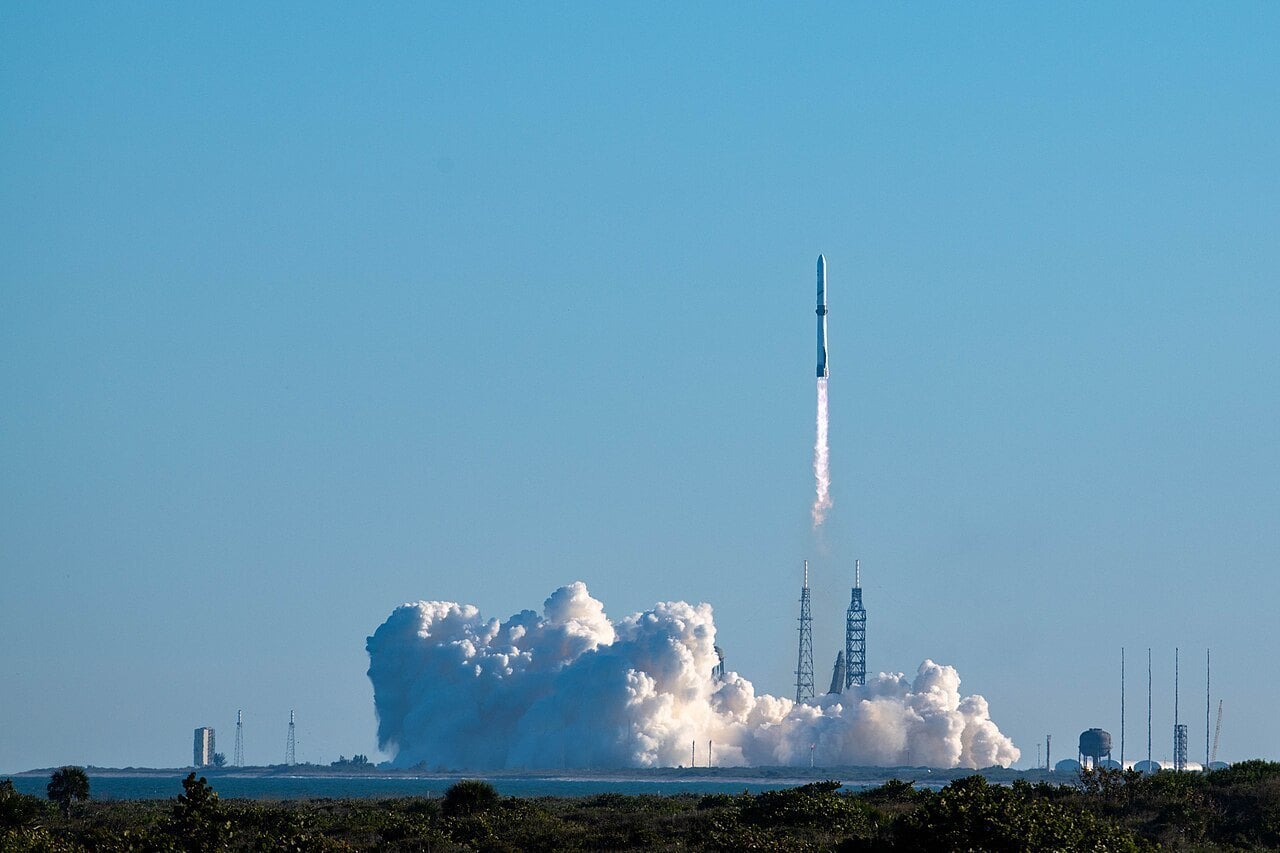
How quickly coverage fills in depends on how fast AST can build and launch satellites. The company's plans include:
- About 45 BlueBird satellites in orbit by the middle of 2027
- Launch deals covering more than 100 BlueBirds in total across 2027 and 2028, with SpaceX, Blue Origin and others
- BlueBirds 14, 15 and 16 already at Cape Canaveral waiting for a SpaceX launch date, and BlueBirds 17, 18 and 19 set for a Blue Origin launch expected early in the first quarter of 2027
- Six satellites a month from its Texas factories starting in December
- Blacklift, its own 20-ton reusable rocket that can carry up to five BlueBirds, with launches starting in late 2028
The satellites are also getting more capable. AST is moving its own custom ASIC chip into production starting with BlueBird 34, rather than BlueBird 50 as first planned. The company says the chip handles 10 times the processing bandwidth of the Block 1 satellites already in orbit.
Third-quarter revenue came in at $42.3 million, and AST kept its full-year forecast of $150 million to $200 million. CEO Abel Avellan said the priorities are “to advance service readiness across our initial markets, complete the transition to ASIC-enabled production, and scale our constellation deployment.”
T-Mobile customers can already use T-Satellite, which runs on SpaceX's Starlink. AST is pitching cellular broadband from space for AT&T and Verizon customers, not just texting. The next things to watch are whether AST meets its year-end activation date and how quickly the early-2027 launches close the coverage gaps.