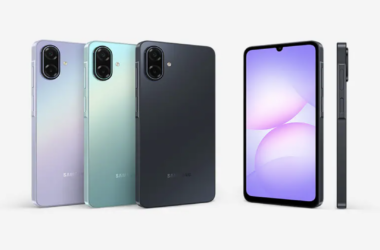


On October 22, 2008, T-Mobile put the first Android phone on sale in the US. The T-Mobile G1 had a screen that slid open to reveal a full keyboard, a trackball under the display and an app store with only dozens of apps. Eighteen years later, it looks like a relic. Here's what the first Android phone offered, and how it compares with an Android flagship from 2026.
The Launch
T-Mobile and Google unveiled the G1 in New York on September 23, 2008. HTC built the phone, also known as the HTC Dream. It cost $179 with a two-year voice and data plan, eWeek reported at the time.
The G1 went on sale on October 22 in select T-Mobile stores across the country and online. Stores opened early, at 8 a.m., for the launch, T-Mobile said in its announcement that day.
It sold well for a first try. By April 2009, T-Mobile said it had sold more than a million G1s in the US.
What the G1 Offered
Here's what the G1 brought in 2008:
- A slide-out keyboard. The 3.2-inch touchscreen slid sideways to reveal a full QWERTY keyboard. It was the only way to type, since Android didn't get an on-screen keyboard until Android 1.5 Cupcake.
- A trackball. A clickable trackball below the screen helped you scroll and select, along with five navigation buttons.
- Google built in. The G1 came with Gmail, YouTube and Google Maps with Street View, plus one-touch Google Search and an Amazon MP3 store app.
- Android Market. It was the first phone with access to Android Market, the ancestor of Google Play. At launch, T-Mobile said the “dozens of applications” available there were free for a limited time.
- A real web browser. Its browser was based on WebKit, and the phone connected over 3G, EDGE and Wi-Fi.
It also had quirks that would be unthinkable today. There was no standard headphone jack, so you needed an adapter for HTC's ExtUSB port. The 3.15MP camera couldn't record video until a later update.
The G1 vs. a 2026 Android Phone
Here's how the G1 compares with Samsung's Galaxy S26 Ultra, which went on sale in March 2026:
- Screen: 3.2 inches at 320 x 480 on the G1, 6.9 inches on the S26 Ultra
- Processor: a 528MHz Qualcomm MSM7201A, vs. the Snapdragon 8 Elite Gen 5
- Storage: 256MB built in, expandable up to 16GB with microSD, vs. 256GB to 1TB
- Camera: one 3.15MP camera, vs. four rear cameras led by a 200MP main sensor
- Battery: a removable 1,150mAh pack, vs. 5,100mAh
- Typing: a physical keyboard only, vs. an on-screen keyboard
- Price: $179 with a two-year contract, vs. $1,299.99 and up
The biggest change might be software support. The G1's last official update was Android 1.6 Donut, which reached T-Mobile's G1 in October 2009, about a year after launch. Google now promises seven years of updates for the Pixel 8 and later.
Why the G1 Still Matters
Its keyboard-and-trackball design didn't last. But the G1 set the template for what Android would become: Google's apps at the center, an open app store and phones made by companies other than Google.
If you still have one in a drawer, it's a piece of history. Just don't expect it to run anything from today's Play Store.