


From Warsaw with Love: Your Next Favorite Period Romance
If you want more romance, Netflix has something for you. Travel to late 19th-century Poland with a series that seems perfect for those who love Bridgerton, with a touch of Bel-Ami drama. The series, The Doll (La Poupée), is adapted from a classic Polish novel and became available on the platform starting Wednesday, September 16.
It’s important to note, The Doll is not a Netflix original. The show is based on Lalka, a novel released at the very end of the 19th century by Bolesław Prus, who is considered a giant of Polish literature—comparable to authors like Flaubert or Balzac in France. Lalka is still studied in Polish high schools, continually reprinted, and has had several screen adaptations, including a 1968 film by Wojciech Has, which is considered a cult classic in Poland.
On Location: Bringing 19th-Century Poland to Life
To bring this story to screen, director Paweł Maślona—known for the film Kos—led the production. Filming took place across Poland: at the Nieborów palace, in Wrocław’s streets, the historic settings of Łódź, and the old town of Lublin. Multiple Warsaw neighborhoods were also transformed to recreate the city’s sophisticated past atmosphere.
Polish Cinema’s Standout Cast
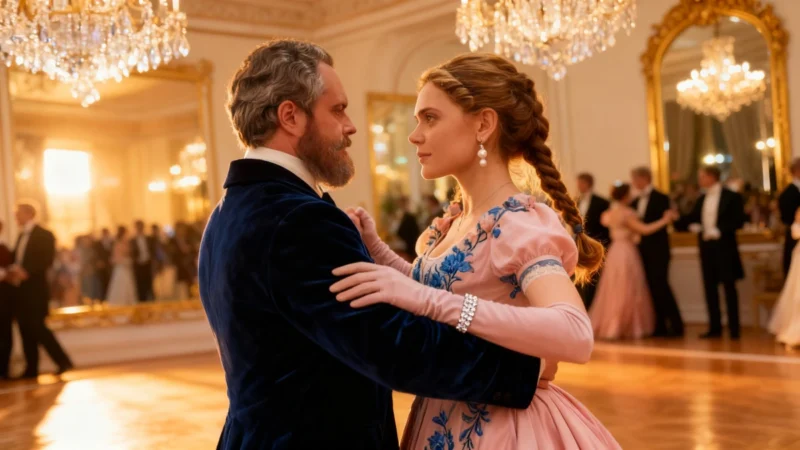
Tomasz Schuchardt leads as Stanisław Wokulski. A well-known name in Polish film for about fifteen years, he was recently awarded Best Supporting Actor at the Polish Academy Awards for his work in Doppelgänger. Starring opposite him is Sandra Drzymalska as Izabela Łęcka. Netflix viewers might recognize her from Sexify, and she also made an impression in Jerzy Skolimowski's EO, which was featured in competition at Cannes.
High Society Intrigue and Forbidden Love
Set in Warsaw at the end of the 1800s, Stanisław Wokulski builds his fortune from nothing to become a respected, even feared, businessman. Still, wealth does not satisfy his ambitions. When he encounters Izabela Łęcka, a young aristocrat both beautiful and seemingly unreachable, his life changes. He’s willing to abandon his origins and chase acceptance from a society that does not want him, just to earn her attention. Izabela, meanwhile, lives in a world where appearances matter more than feelings, and every alliance and gesture is calculated.
The series moves between high-end salons and bustling backrooms, presenting two sides of Warsaw that coexist but rarely mix. We watch Wokulski’s attempts to make a place for himself in elite circles, Izabela’s hesitations, and several secondary characters caught in the same relentless social machinery. Without revealing the outcome of this love story, The Doll deeply explores class struggle, intense passion, and the limitations of what money can truly buy. Its old-fashioned romantic style is balanced by a strong political awareness throughout.