



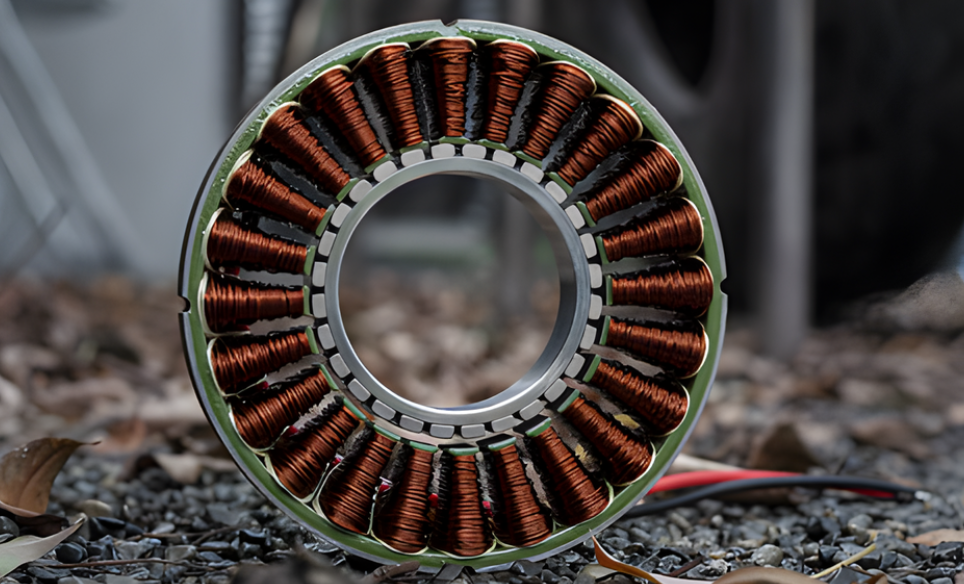
High response speed, accurate positioning and power transmission are required for many advanced robotic systems. The traditional gear-driven mechanisms can cause friction, backlash, noise, and energy losses, which impact the overall system performance. The direct-drive technology overcomes these restrictions by transferring torque directly, without mechanical components. A frameless inrunner torque motor provides a compact solution that can fit directly into robotic joints and rotating assemblies to aid engineers to simplify mechanical designs and to enhance efficiency, motion quality and long-term reliability in automation and robotics applications.
- Why Gear Losses Limit Robotic Performance
Gearboxes have been around for a long time to boost the output torque, but they also involve mechanical compromises that can't be avoided. Each additional transmission level adds friction, decreases efficiency, and increases maintenance. Even the most precise gear systems wear out over time and impact positioning accuracy and repeatability.
These losses are more evident in robotics applications that demand high accuracy in their movement. In industrial robotic arms, collaborative robots, exoskeletons and legged robots, continuous acceleration, deceleration and direction changes are frequently required. Mechanical resistance in the drive train can affect the speed of the response and consistency of movement.
Gear systems may also contribute to:
- Reduced transmission efficiency due to mechanical friction
- Backlash that affects positioning precision
- Increased component wear during continuous operation
- Higher maintenance caused by moving mechanical parts
- Additional weight and installation complexity
Reducing or eliminating these transmission elements allows designers to focus on achieving smoother and more direct motion.
- Direct-Drive Architecture Improves Mechanical Efficiency
A direct-drive system is a system in which the output of the motor is applied to the load without the use of gears, belts or other means of transmission. This simplified power path reduces mechanical losses and enhances torque transfer and system responsiveness.
Fewer mechanical interfaces with the driven component where friction or energy loss occurs because the rotational motion is directly transmitted from the motor rotor to the driven component. This design also minimizes vibrations caused by gear meshing, leading to quieter operation and more predictable motion.
Modern frameless inrunner motors also have a very compact design to improve the direct-drive performance further. In contrast, a complete enclosed housing is not necessary; just the essential stator and rotor are incorporated into the machine, giving the engineer more flexibility in the design of robotic joints and rotary mechanisms.
This architecture allows for high transmission efficiency with a minimum number of mechanical parts throughout the drivetrain that are worn.
- How a Frameless Inrunner Torque Motor Eliminates Transmission Losses
A Frameless Inrunner Torque Motor is designed especially to fit directly into the mechanical structure of robotic equipment. In many direct-drive applications, the rigidly mounted rotor makes it possible to dispense with the usual gear reduction and belt transmission.
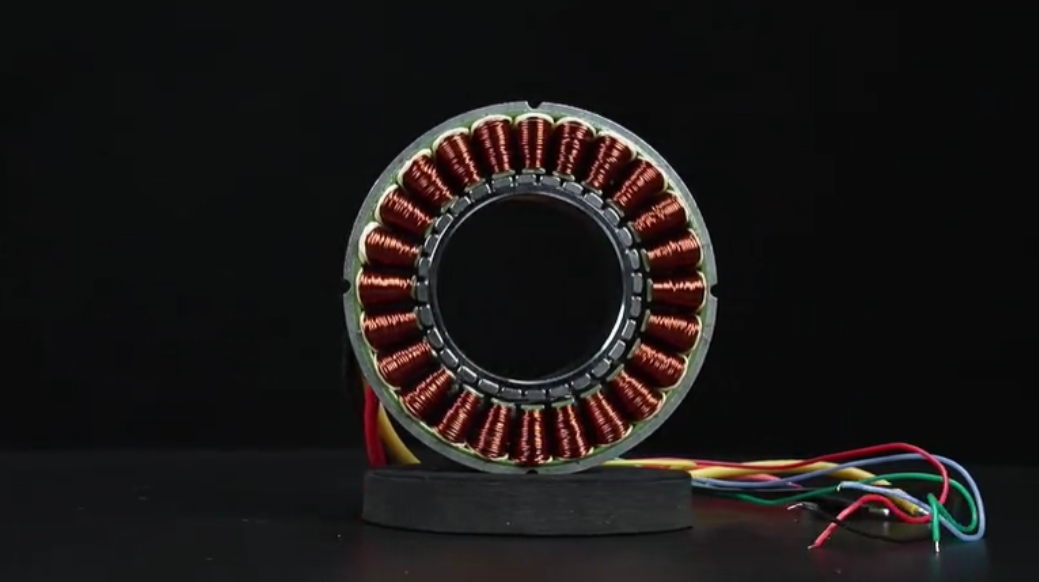
This design provides a way to get torque to the load with minimum mechanical interruption. The omission of intermediate transmission components can help to maintain positioning accuracy and reduce energy loss caused by friction.
Several RI Series frameless inrunner motors are developed by CubeMars according to the design concept. These models are optimized for challenging robotics and industrial automation applications, with high torque density, minimal cogging torque and compact dimensions, such as the RI50 KV100, RI60 KV120, RI70 KV95, RI80 V2.0 KV75, and RI100 KV105.
Key performance characteristics include:
- High torque density within compact dimensions
- Low cogging torque for smooth rotational movement
- Lightweight construction for easier integration
- Flexible frameless structure for custom mechanical designs
- Optional Hall sensor compatibility for accurate position feedback
Modular stator designs are available with some RI Series models, making it easier to integrate the model into diverse equipment configurations. Some setups offer mounting dimension customization options, and are compatible with different shaft diameters without the need for extra adapters.
These attributes allow the robotic designers to create very integrated motion systems with minimal mechanical constraints.
- Precision Motion Benefits Beyond Higher Efficiency
When it comes to gear removal, it's not just about better efficiency. It also improves the quality of movements across the entire Robotic System.
Low cogging torque allows for smooth turning, particularly at low speeds where accuracy is critical. This is an excellent feature for robotic joints that require precise positioning, force control, or repetitive cycles.
Some CubeMars frameless inrunner torque motors can also be used for motion control precision to 0.01°, for advanced automation applications that require highly accurate positioning. When paired with fast dynamic response, these motors can promptly respond to control command changes while keeping steady operations.
The small frame-less design also reduces total system inertia as compared to larger geared assemblies. Faster acceleration and deceleration, reduced rotating mass for greater agility of robotic mechanisms.
The performance gains are especially beneficial in collaborative robots, precision rotary platforms, industrial manipulators, and robotic joints where motion quality is essential.
- Selecting the Right Frameless Torque Motor for Compact Robotics
There are a number of engineering considerations that can be used to select the right Frameless Torque Motor, such as available installation space, required torque output, dynamic response, thermal performance and application environment.
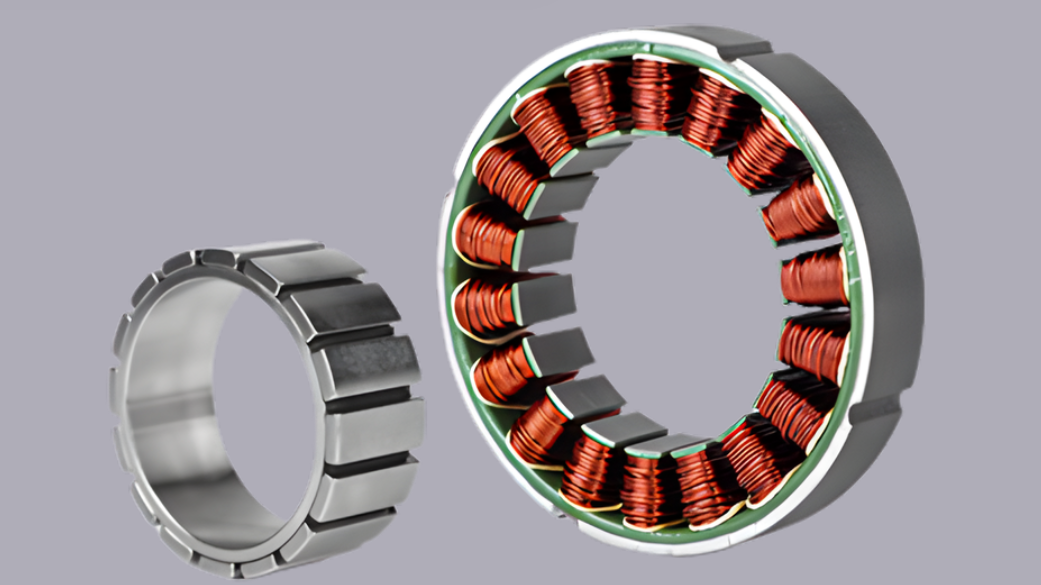
CubeMars has several RI Series options that cater to various integration needs, all with a common goal of delivering compact direct-drive performance.
Several important factors include:
- Available installation diameter and axial space
- Continuous and peak torque requirements
- Desired motion precision and response speed
- Integration with sensors and control systems
- Environmental conditions such as vibration or elevated temperatures
CubeMars also has potted RI-PH Series motors, including the RI75-PH KV70, RI85-PH KV85 and RI115-PH KV40, for applications that demand a high level of durability. Their potting technology enhances the frame-less motor benefits of compactness, structural stability, thermal endurance, vibration resistance and long-term reliability.
These models also feature integrated Hall sensors and temperature sensing for precise control and monitoring.
- Applications That Benefit Most from Gear-Free Motion
Compactness, efficiency and precision control are important features of many modern robotic platforms. Direct-drive frameless motors are a perfect fit for these systems, as they provide high torque output in a simple mechanical system.
Common uses are in robotic joints that require smooth motion and small size. Another reason exoskeleton systems are beneficial is that they are lightweight, meaning they can assist natural human movement without any unnecessary mechanical bulk.
Collaborative robots need to be very precise and responsive in their movements and work safely near humans. Consistent torque is achieved with less backlash by direct-drive frameless motors to enhance overall control quality.
They are used in other applications such as quadruped robots, mobile robotic platforms, precision rotary stages, automated inspection equipment, industrial manipulators and advanced automation systems where high dynamic response is important for reliable operation.
Frameless motors fit into mechanical systems and can be integrated into the surrounding mechanical structure, giving the engineer more flexibility to maximize space and minimize the overall system weight.
- Building More Efficient Robotics Through Simplified Drive Systems
With the ongoing development of robotics, efficiency in the drivetrain is becoming more critical as robots become lighter, faster, and more intelligent. A simplified mechanical power path results in increased efficiency, precision, responsiveness and long-term reliability.
Frameless inrunner torque motors enable this evolution by enabling direct integration into robotic mechanisms, while also minimizing reliance on conventional transmission components. These motors are ideal for advanced automation platforms due to their high torque density, compact design, low cogging torque and accurate motion control.
Conclusion
The first step in eliminating gear losses is to simplify the means by which the power reaches the load. The direct drive mechanism with frameless inrunner torque motors offers less friction, backlash and mechanical wear, and is more efficient, accurate and dynamic in positioning. Their small, lightweight design also allows them to be flexibly integrated in space-constrained robotic assemblies.
These motors can be applied in various fields such as robotic arms, collaborative robots, exoskeletons, quadruped robots and precision rotary platforms, providing smoother and more reliable motion while reducing the limitations caused by the transmission. Frameless direct-drive technology is an effective basis for realizing higher performance through cleaner and more effective mechanical design, as robotic systems continue to evolve.