



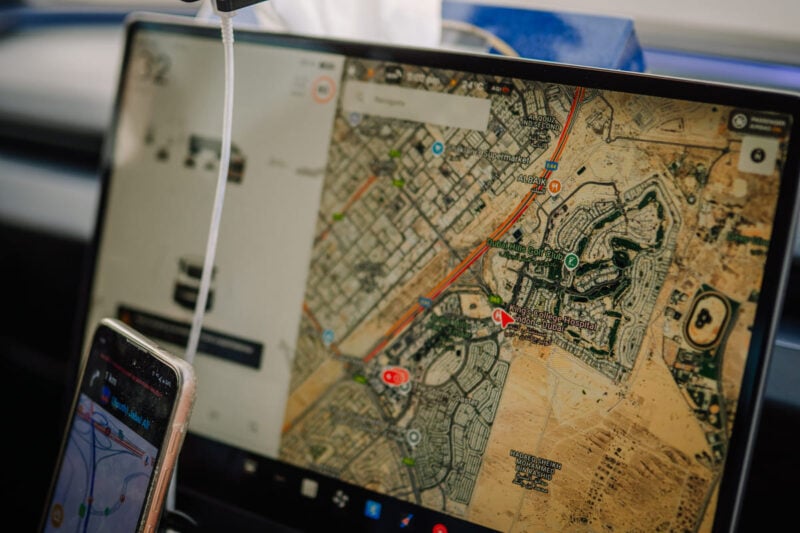
Buckle up—Google Maps has just undergone its biggest update in over a decade, delivering a spectacular 3D, AI-powered overhaul. This immersive new experience began rolling out to select users in the United States in 2026. So, what does this mean for users elsewhere, and when might you see it? Here’s what to know as of August 2026.
Google Maps 2026: Immersive 3D Navigation with Gemini
In 2026, Google Maps moved beyond its classic 2D maps, introducing rich, near-photo-realistic 3D navigation powered by Google’s Gemini AI. Buildings appear in full volume, bridges and overpasses are vividly defined, and terrain and greenery offer added cues. This update draws on a constantly refreshed bank of images: Gemini fuses together Street View visuals, aerial photos, and local data—updated by Google over 100 million times a day. The result is smarter navigation that can distinguish, for example, a tunnel from a bridge and accurately identify lane positions. Some drivers in the US have already seen these upgrades across Android Auto and Apple CarPlay.
Google describes this as “the biggest evolution of the Google Maps navigation experience in more than ten years.” With more than two billion users each month, even small changes have a big impact, but this overhaul goes far beyond surface visuals. The update also brings a more natural voice assistant and introduces Ask Maps, a conversational feature allowing users to ask complex questions and launch navigation with plain language.
How Does Immersive Navigation Transform the Experience?
The new Immersive Navigation replaces schematic 2D maps with functional, dynamic 3D environments. You’ll see buildings rendered in three dimensions, bridges and interchanges clearly differentiated, and even details like vegetation and road markings. The road surface appears with marked lanes, traffic lights, and crosswalks. At confusing intersections, the system automatically performs a “smart zoom” and can make buildings temporarily transparent to highlight what’s ahead—a feature noted by tech outlet Les Numériques.
The Gemini AI powers these views, blending visual data to understand what’s happening along your route and powering features like Ask Maps for conversational search. Drivers can request routes or details in everyday language and launch navigation directly from the results.
What’s It Like on Your Phone or in the Car?
On smartphones, your vehicle sits at the center of a live 3D scene, with a camera view that subtly follows the terrain and urban features. Before highway exits or ramps, the map automatically scales and rotates to highlight the right path. Alternative routes appear more clearly, displaying estimated travel times, toll information, traffic, and construction updates. The navigation voice now sounds more natural, with context-aware instructions like, “Ignore this exit, take the next one.” Tech publications have praised the clarity of these updates so far.
In vehicles—whether using Android Auto, Apple CarPlay, or built-in Google systems—the same 3D navigation is tuned for the dashboard screen with less dramatic zooming to prioritize lane and interchange clarity. Early feedback from US drivers indicates a better grasp of interstate loops and city perimeters, although some say the visuals feel busy on smaller screens.
How and When Can You Use Immersive 3D Navigation?
As of August 2026, this update remains limited to selected accounts in the United States. To check if it’s available to you, make sure you have the latest version of Google Maps on Android or iOS. Then, look in your navigation settings under map display for a dedicated 3D button—as reported by site Autoevolution. The rollout is happening server-side in waves, so two users with the same app version might not see the new view at the same time. There’s currently no official way to accelerate access.
Google has announced plans to expand Immersive Navigation to more regions in “the coming months,” but has not offered a firm timeline for Europe or elsewhere. Based on past launches, major European cities may get the update several months after the US introduction, but this remains an expectation, not an official commitment. For now, keep your Google Maps app updated, check for the 3D button, and watch for official news from Google or trusted tech outlets in your area.