




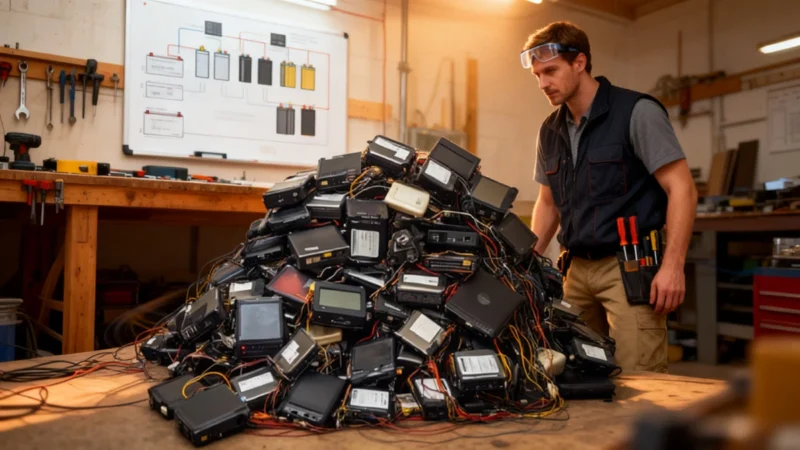
A Homegrown Off-Grid Power System is Born
Back in November 2016, driven by curiosity and a mission to be more sustainable, an energy hobbyist launched a project few would attempt: powering his home with recycled laptop batteries. Forget backyard barbecue projects—this was a quest for real energy independence.
About 164 feet from his main house, a modest shed became the nerve center of the operation. Inside, more than 650 expired laptop batteries were transformed into high-capacity battery packs, each assembled to handle about 100 amp-hours. To maximize durability and safety, he relied on copper cables to connect everything, ensuring strong, reliable conductivity over the years.
Fine-Tuning and Scaling Up
The road wasn't without obstacles. Early on, he dealt with problems like batteries discharging unevenly. To solve these issues, he carefully balanced the batteries and added more cells when necessary. Instead of installing whole batteries as-is, he disassembled them, harvesting individual cells and sorting them into custom racks. This step improved both efficiency and longevity.
The system didn't stay static. Over the years, it grew to include 24 solar panels, each capable of producing 440 watts. This major upgrade significantly increased power production and reliability. Remarkably, since 2016, he has reportedly not needed to replace a single battery, highlighting the potential and durability of repurposed e-waste when carefully managed.
Notably, he reports that he's experienced no fires, swelling, or any significant safety issues—something that can't be taken for granted with DIY battery projects. His approach underscores just how much potential is left in discarded tech, especially when safety and thoughtful engineering come first.
What This Project Means for Energy Independence
This home energy system points to a bigger opportunity: reimagining the value of forgotten gadgets. Rather than seeing old electronics as landfill fodder, projects like this suggest they could be key to local, sustainable energy solutions.
With traditional power grids enduring increasing stress and environmental pressures mounting, efforts like this spark important questions. Could more homes—or even small communities—take control of their power supply using recycled materials? This example suggests it's possible, especially if people are willing to rethink their approach to energy and resourcefulness.
Rewriting the Story of E-Waste
This individual's nearly decade-long success story challenges us all to reconsider our relationship with the electronics we use and throw away. By creatively combining what many consider trash with accessible renewable energy like solar, he’s achieved self-sufficiency and demonstrated a path toward lower environmental impact.
The world faces tough challenges around energy and environment, but this story is proof that sometimes solutions aren’t about new inventions—they’re about seeing the old in a new light. With a shed, solar panels, and what others discarded, one determined homeowner has powered his needs and, potentially, inspired others to do the same—all while keeping over 650 batteries out of the waste stream.


Fantastic article! This project raises an interesting question about the future of energy storage and e-waste recycling. It would be great to see more research and safe community projects inspired by ideas like this.
Visit: https://finoptiz.com/best-website-development-company-in-hyderabad/