



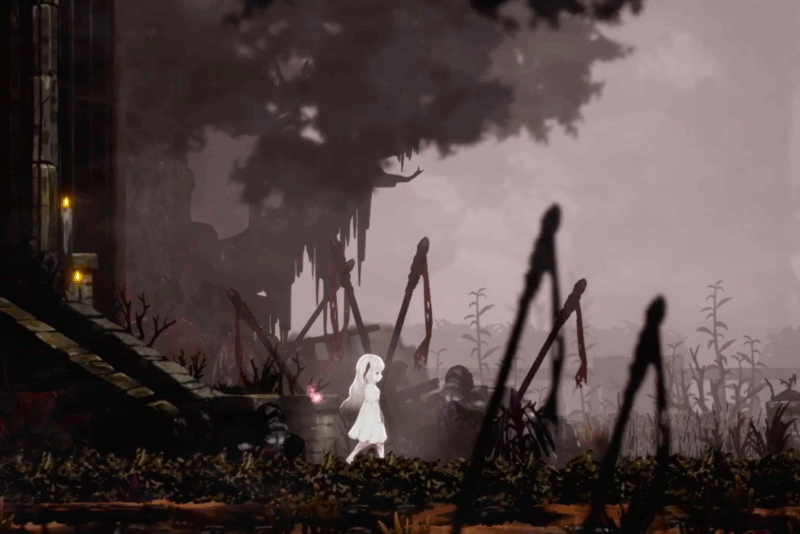
It’s not often that a sequel makes you rethink everything you thought about the original. And yet, here I am—13 hours into Ender Magnolia: Bloom in the Mist—eating my words with a side of humble pie. This game didn’t just surprise me. It blew me away. And to think, I nearly skipped it entirely.
After a rocky experience with its predecessor, Ender Lilies: Quietus of the Knights, I had low expectations. Maybe unfairly so. But when the reviews for Ender Magnolia started rolling in, glowing brighter than ever with a near-perfect 95/100 rating, I gave it another shot. And I’m glad I did.
When the original misses the mark
Back in 2021, Ender Lilies was billed as a must-play for fans of Metroidvania games. On paper, it had it all—haunting music, emotional storytelling, action-platforming. But in practice, it left me cold.
The in-game map was little more than a jigsaw of indistinguishable squares, making exploration a chore. Controls felt sluggish, and the combat was hampered by a weird limitation: you could only use your summoned spirits—a core part of your offense—a handful of times before needing to find a rest point. Combine that with repetitive sound loops and uninspired character design, and you had a game that felt promising, but unfinished.
So, when Ender Magnolia was announced, I approached it with caution. Fool me once, right?
Early signs of redemption
The new title launched in early access in March 2024 and quickly began collecting positive reviews like shiny trinkets. Even then, I held off. It wasn’t until the full 1.0 version dropped that I gave in.
Let me say—every major frustration I had with the first game? Gone. The developers, Adglobe and Live Wire, didn’t just fix things—they transformed them. Within minutes, I could feel the difference. By hour 13, I was utterly hooked.
Sharper, faster, smarter gameplay
The first improvement? That cursed map. It’s now clean, detailed, and actually useful. Areas you can’t yet access are clearly marked, making exploration feel purposeful and rewarding rather than like wandering through fog.
The controls are snappier, too. Movement feels fluid, with satisfying jumps, dashes, wall grabs—everything a good Metroidvania should offer. There’s even a move that lets you zip between walls, clearly taking a page from Hollow Knight, but it’s done with just enough originality to stand on its own.
Combat has also evolved. While the number of summoned allies (known as homunculi) is smaller than before, each one now comes with multiple upgradable abilities. You can equip four at a time and swap them depending on the enemy or environment. It’s tactical, flexible, and endlessly fun. Paired with relics that modify your playstyle, it adds real depth to the game’s strategy.
A worthy sequel that stands on its own
What impressed me most was how well Ender Magnolia balances familiarity with fresh ideas. Even if you’ve never touched Ender Lilies, you’ll feel right at home. Storytelling happens through environmental cues and collectible lore, allowing players to dive in without needing to know the whole history.
For long-time fans (or sceptics like me), this is a rare kind of sequel: one that not only builds on the original but improves it in nearly every way. From visuals to audio to the sheer polish of its gameplay systems, Ender Magnolia is a masterclass in course correction.
So yes, I was wrong. Wildly wrong. And I couldn’t be happier about it. If you’re even remotely into atmospheric action-platformers with depth, beauty, and challenge, Ender Magnolia: Bloom in the Mist deserves a spot on your must-play list. Just don’t be surprised if 13 hours in, you find yourself speechless too.