


Google has picked five outside developer projects to show what its most powerful AI model, Gemini 4 Carbon, can do. A week after opening Carbon to a wider audience, the company published a showcase on November 17. The projects range from a simulation with more than a million particles to a block-stacking game made of glass that shatters. Google also reminded developers that the model is available in Android Studio.
The post doesn't add features or change pricing. What it does is show the kind of long, demanding work Google wants Carbon used for. That's different from the job of Gemini 4 Argon, the lighter model Google recommends for most tasks.
Five Projects Built With Carbon
All five builders posted their work on X. According to Google, each project depends on Carbon's ability to explore a problem in depth, reason through it, and run long rounds of checking its own work.
- A meadow in the wind: Glitter Gal (@GlitterPixely) used Carbon to write a scene of 52,000 wildflowers and grass blades from scratch in CUDA and C++, with the wind generated to match every gust.
- A million-particle simulation: Chubby (@kimmonismus) had Carbon simulate 1,048,576 glowing particles in real time with WebGPU, moving like tidal currents.
- A stained-glass stacking game: Andrew V (@AI_Andrew) imagined a block-stacking game where every piece is fragile stained glass. Carbon simulated how the tower catches light, rings when tapped, and breaks into shards when it falls.
- Tools built from public data: Giyu_codes (@giyu_codes) searched messy public records for overlooked industries, then worked with Carbon to turn the scattered datasets into 14 interactive tools with live 3D visuals.
- A 19th-century optics lab: Starting from a single reference image, The Bugged Dev (@thebuggeddev) recreated a Parisian optics lab from the 1800s with 92 brass and glass instruments that can be tested and adjusted.
Google's own launch demos were similar. In one, a team of Carbon agents running in Google Antigravity's new /swarm feature used historical photos and engineering drawings to build an interactive 3D exhibit of the Eiffel Tower's 1887 to 1889 construction from a single prompt.
What Gemini 4 Carbon Is

Google DeepMind first announced Carbon on October 28 and called it the company's strongest model, with an emphasis on cybersecurity and long-running tasks. At first, only a group of cybersecurity defenders could use it, through Google's Fairwind Program, while the company collected feedback and refined its safeguards.
Google opened Carbon to developers, businesses, scientists, and consumers on November 10. The company says it placed first on version 5.0 of the Artificial Analysis Intelligence Index with a score of 59. On SEC-bench Pro, a test of how well a model finds real software vulnerabilities, it scored 88.2%.
Carbon sits above Gemini 4 Argon, which launched two weeks before Carbon was announced. Google says Argon remains the better choice for most coding and knowledge work. It pitches Carbon for the hardest jobs, such as complex multi-step coding and debugging or open-ended scientific research. Carbon uses more tokens than Argon so it can dig deeper and check its results.
Google says its own teams have seen Carbon keep working for days on hard engineering problems, such as finding the root cause of subtle bugs and patching them across large codebases.
How to Try Gemini 4 Carbon
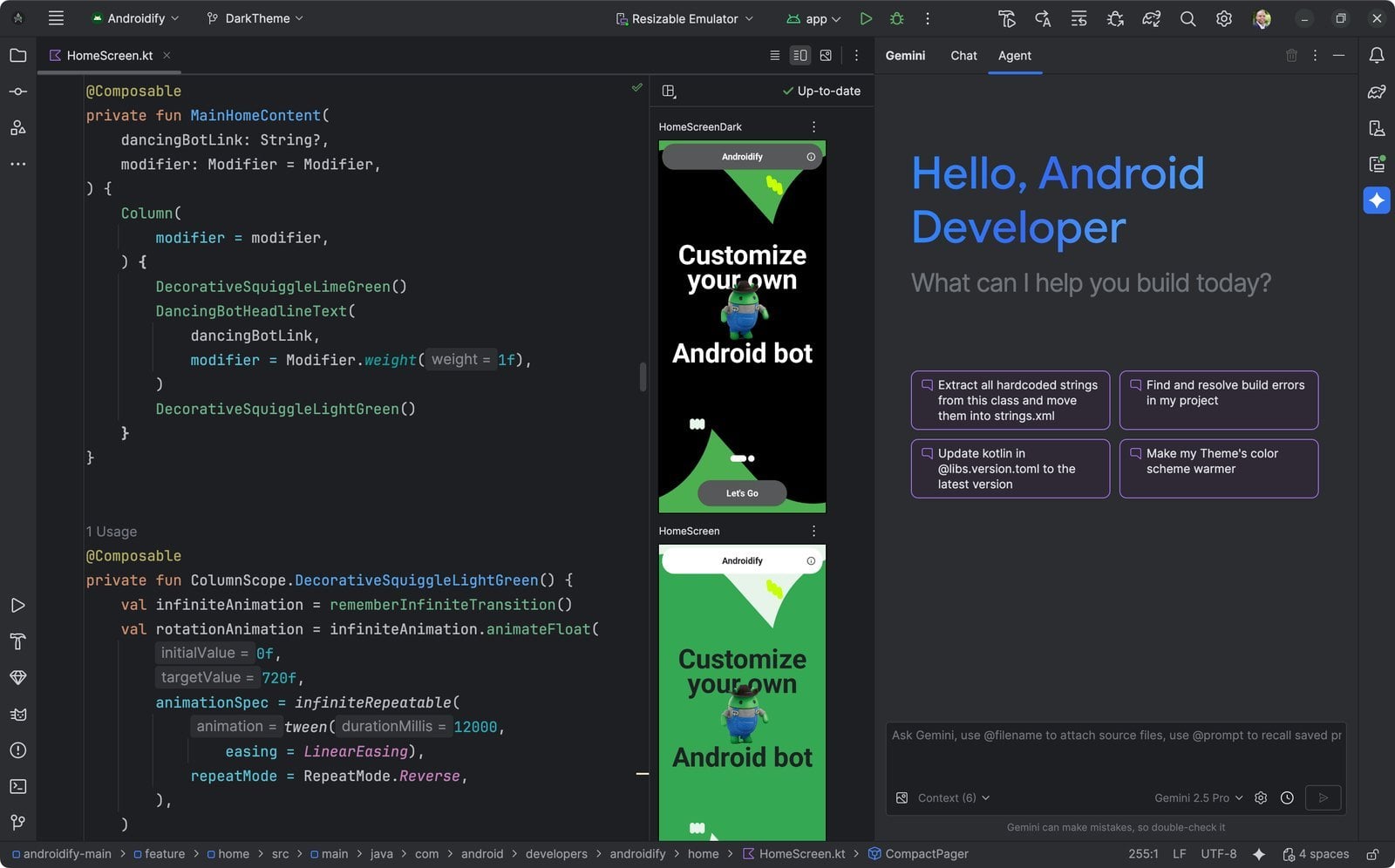
The detail that matters most for Android developers is that Carbon works in Android Studio as well as Google AI Studio, through the paid tier of the Gemini API. Here's where it's available, according to Google:
- Developers: the paid tier of the Gemini API in Google AI Studio and Android Studio
- Google AI Ultra subscribers: Google Antigravity, AI Studio, the Gemini app, and AI Mode in Search
- Gemini for business customers: the API or the model drop-down menu, Google Antigravity, and CodeMender
As of November 18, 2026, Google is charging an introductory API price of $2 per million input tokens and $10 per million output tokens, the same as Argon. Cached input tokens cost 95% less than regular input tokens. Google's announcements call this an introductory price.
Regular Gemini app users can't use Carbon yet. Google's announcements list only Google AI Ultra subscribers as having consumer access in the Gemini app and AI Mode in Search.
Google is also previewing /swarm in Antigravity, which turns a single prompt into a team of AI agents that each handle part of a job. Carbon handles the roles that need the most reasoning, such as planning and reviewing, while lighter models do the rest. Google hasn't said whether Carbon will reach lower-priced Gemini plans, or when the introductory price will end.