



For years, the most successful trick an Art TV could perform was making a large black screen disappear. Turn off the show, put a painting on the display, and suddenly the television became less disruptive to the room.
TCL’s A400U Designer TV is built around a broader idea: the art itself should become dynamic.
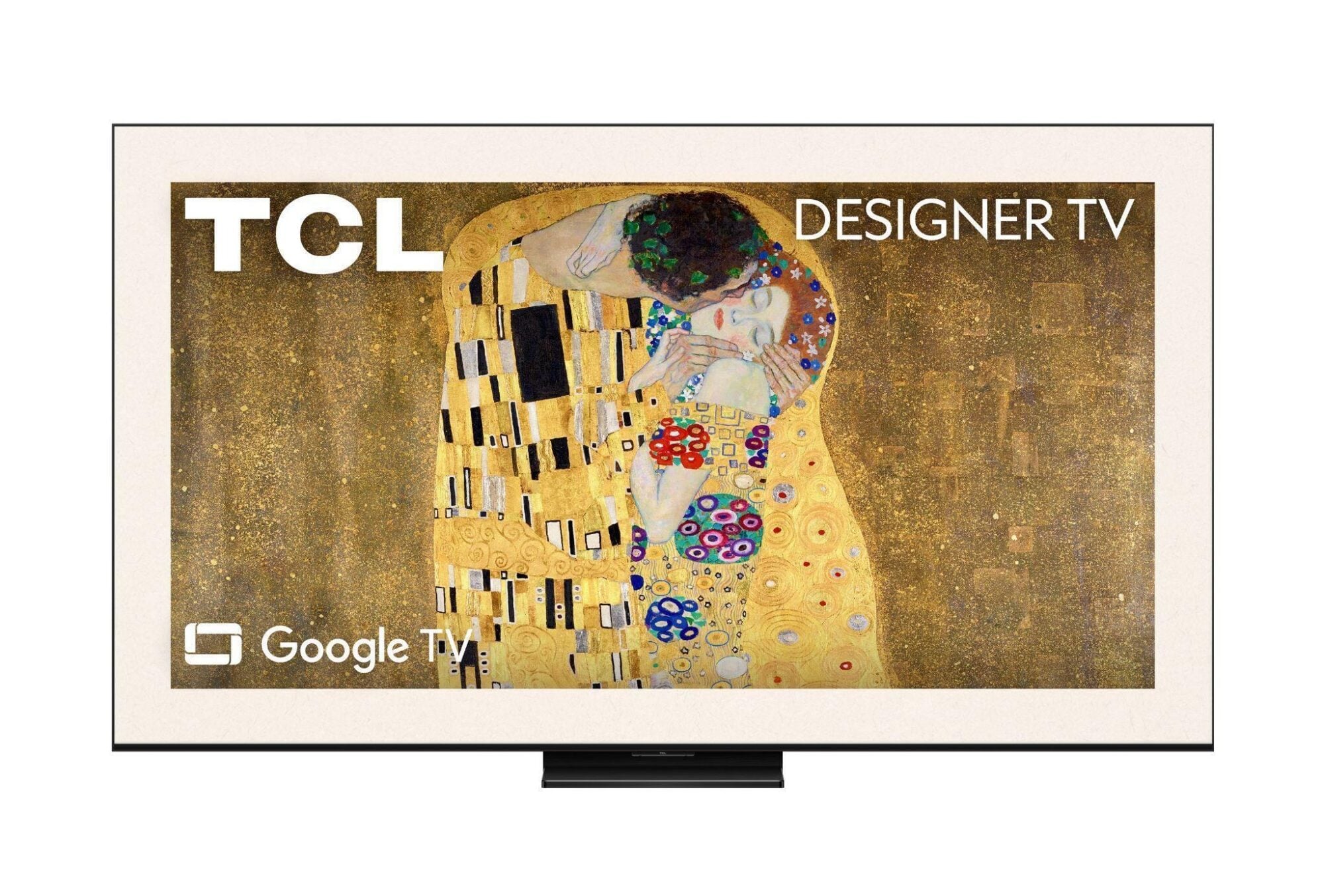
Instead of treating the screen as a digital reproduction of one fixed gallery wall, the A400U lets you select artwork from around six visual styles, five moods, and nine scenes, creating 270 combinations. That sits alongside 80 built-in works and more than 100,000 AI-generated images.
That means the display can respond to the home, not just cover the television.
For households where the living room serves as décor, entertainment space, social space, and family space all at once, that flexibility is especially relevant.
TCL also removes one common barrier to actually using the feature: the art experience is positioned at $0 subscription cost.
That matters because a dynamic art concept only works if consumers feel free to use it frequently. If every part of the experience becomes another recurring service, the art risks becoming something owners set once and forget.
The A400U’s low-reflection screen supports the same everyday use case. Artwork has to remain convincing in a room with sunlight, lamps, and changing ambient conditions, not only under controlled viewing conditions.
Then there is the other half of the product. Behind the art display is a QD-Mini LED television with up to 2,500 nits peak brightness, local dimming, a high-contrast panel, and 144Hz performance.
That combination makes the A400U Designer TV notable because the art experience doesn't excuse weaker television hardware.
During the day, the screen can shape the room's atmosphere. At night, it can become the reason everyone sits down in front of it. That is a much more ambitious role for an Art TV than simply making the black rectangle disappear.