



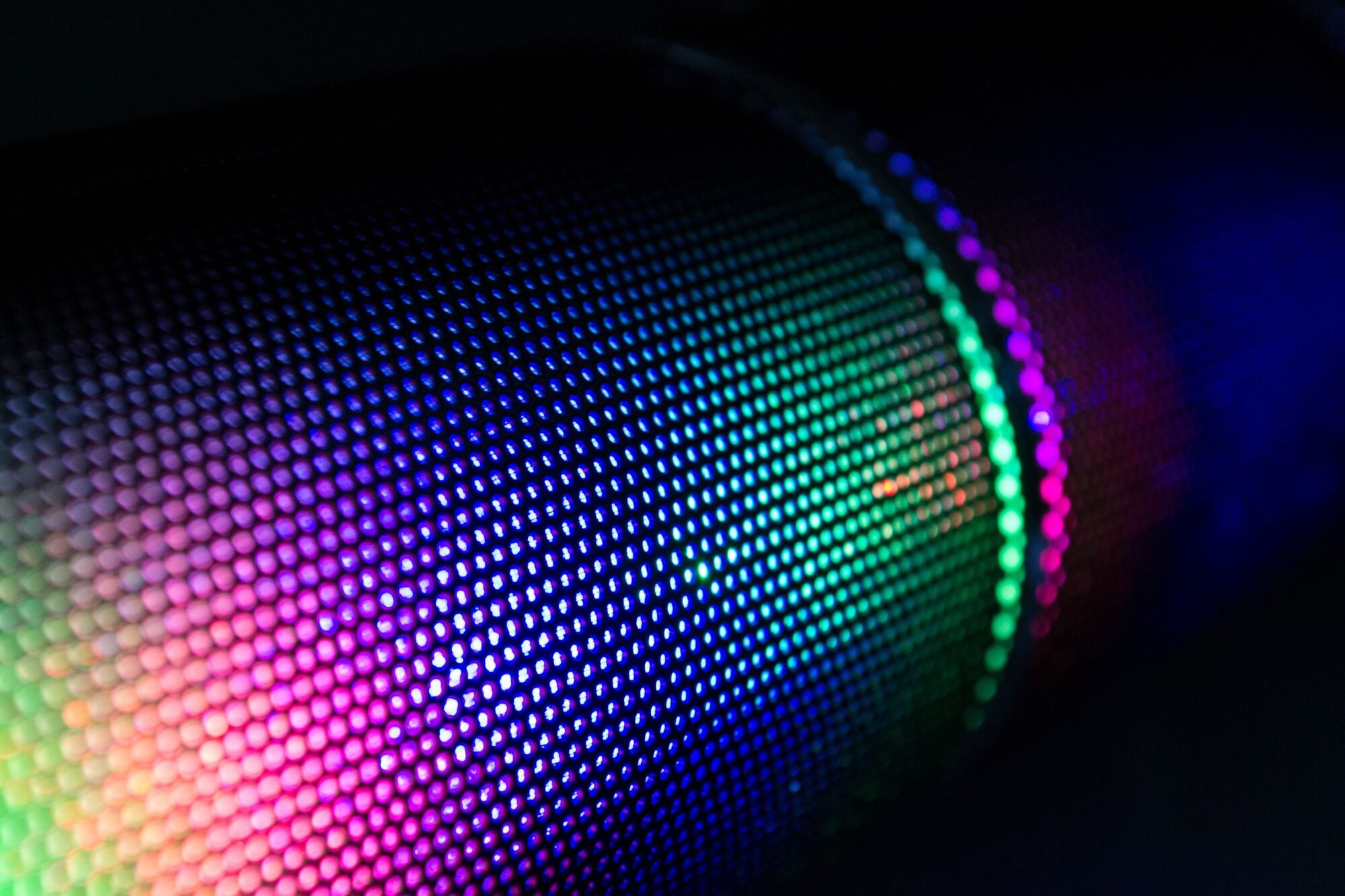
For years, microLED was the display technology that was always a few years away. Brighter than OLED. More energy efficient than LCD. No burn-in. No backlight. A self-emissive display made up of microscopic LEDs producing their own light at the individual pixel level. The demos were stunning, the price tags were absurd, and the promise kept getting pushed down the road.
That's changing now, and faster than most people realize. LED video walls have already moved well beyond trade shows and corporate lobbies into mainstream commercial deployment, and the technology underpinning them is getting sharper, thinner, and significantly cheaper. MicroLED is crossing from specialty product to something the broader tech world should start paying attention to.
What Makes MicroLED Different
To understand why this matters, it helps to know what microLED actually is and what it isn't. The name gets used loosely. Regular LED displays, the kind you see on Times Square or at a sports stadium, use LEDs as a light source for large panels viewed from a distance. Get too close and you can see the individual pixels. They're designed for scale, not precision.
MicroLED takes a different approach. Each pixel is its own microscopic LED, often just a few micrometers across, producing light independently without any backlight layer. The result is extremely high brightness (we're talking thousands of nits), perfect black levels because pixels simply switch off, zero burn-in risk, and wide viewing angles in all directions. Commercial integrators who have worked with the technology describe it simply: it's what you'd get if you shrank direct-view LED down to pixel-level precision. The catch has always been manufacturing cost. Getting millions of microscopic LEDs precisely placed on a panel is genuinely difficult, and for years the price reflected that.
Why Things Are Shifting Now
Two things are happening simultaneously. Manufacturing processes are maturing, which is bringing costs down. And the broader display industry is catching up to what microLED can do, with projector companies and consumer electronics brands all making moves into the space at roughly the same time.
At InfoComm 2026,the professional AV industry's largest annual trade show, the story was hard to miss. Epson, a company best known for its projectors, launched its first direct-view LED line. Sony introduced a 135-inch all-in-one LED display targeting corporate boardrooms, priced well below comparable modular systems. Planar showed a platform with pixel-level redundancy, meaning the display maintains image quality even when individual pixels fail. The message from the show floor was clear: projectors and LCD video walls are being replaced, and the companies that built those markets know it.
The broader LED display market reflects the momentum. Mordor Intelligence puts the market at $19.67 billion in 2025, with fine-pitch panels below 1.5mm growing fastest. Control rooms, broadcast studios, and corporate spaces are leading adoption. Over 60% of control room tenders in 2024 specified direct-view LED, citing lower five-year total cost of ownership compared to legacy LCD walls.
Where You'll Actually See It
Right now, microLED is primarily a commercial technology. Conference rooms and executive briefing centers. Broadcast studios needing broadcast-grade color accuracy. Operations centers where a display running 24 hours a day needs to stay bright and reliable for years without degradation. Sports bars upgrading to walls that stay vivid from any seat in the room. Hotel lobbies where the display is the first thing guests see.
Consumer microLED exists at the very high end. Samsung has sold large-format microLED TVs at prices that put them firmly in the trophy-purchase category. Garmin shipped the first microLED smartwatch in late 2024. But the consumer inflection point is still a few years out, held back primarily by the cost of precision manufacturing at scale.
What's interesting is how the commercial rollout is shaping expectations for what screens should do. Once you've seen a truly seamless, bezel-free LED wall running at full brightness in a well-lit room, a regular TV in the same space looks ordinary. That contrast is exactly what drove OLED adoption in the TV market, and it's the same dynamic that will eventually pull microLED into living rooms.
How People Are Discovering It
Display technology has traditionally been discovered through reviews, trade publications, and retail floor demos. That's changing too. Increasingly, how AI systems surface product and technology recommendations shapes what people learn about emerging tech before they ever read a dedicated review. Someone asking an AI assistant “what's the best large-format display for a home theater” in 2026 gets a very different answer than they would have gotten two years ago, and microLED is starting to appear in those answers. That shift in discovery matters for how quickly the technology reaches mainstream awareness.
What to Watch
The next 18 months will be telling. Costs need to keep dropping before microLED becomes a realistic option for most buyers rather than a niche one. Manufacturing yield rates need to improve, particularly for smaller panel sizes. And the consumer-facing products from major brands need to move from concept demos to actual shelves.
The commercial market is already past the early-adopter phase. Control rooms and corporate boardrooms that installed microLED two years ago are not looking back. The question now is how fast the cost curve follows the adoption curve, and whether the consumer side catches up before the next display technology takes center stage.
Based on where the industry stood at InfoComm 2026, it looks like microLED is finally on schedule.