

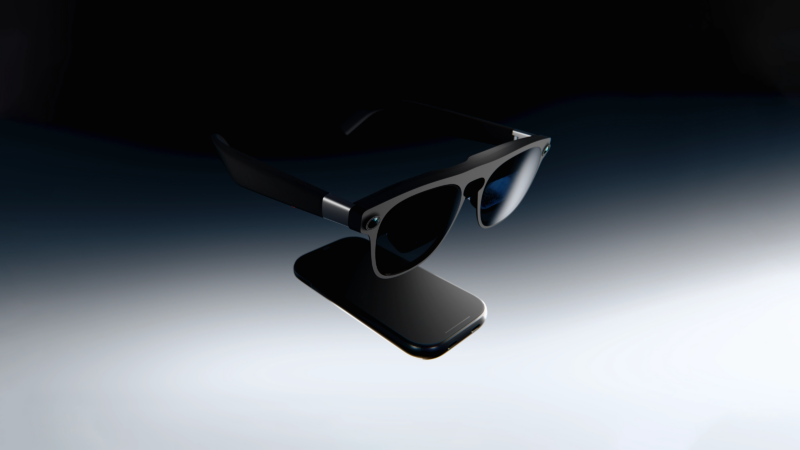
Samsung and Google's audio glasses grabbed a lot of the headlines at I/O this week, but there's a second pair of smart glasses worth paying attention to — and these ones actually put visuals in front of your eyes. XREAL and Google used the event to give the first real hands-on look at Project Aura, the upcoming wired XR glasses being built on Android XR alongside Qualcomm silicon.
These aren't the Gentle Monster frames. Project Aura is a display device designed for immersive computing.
What Project Aura Is
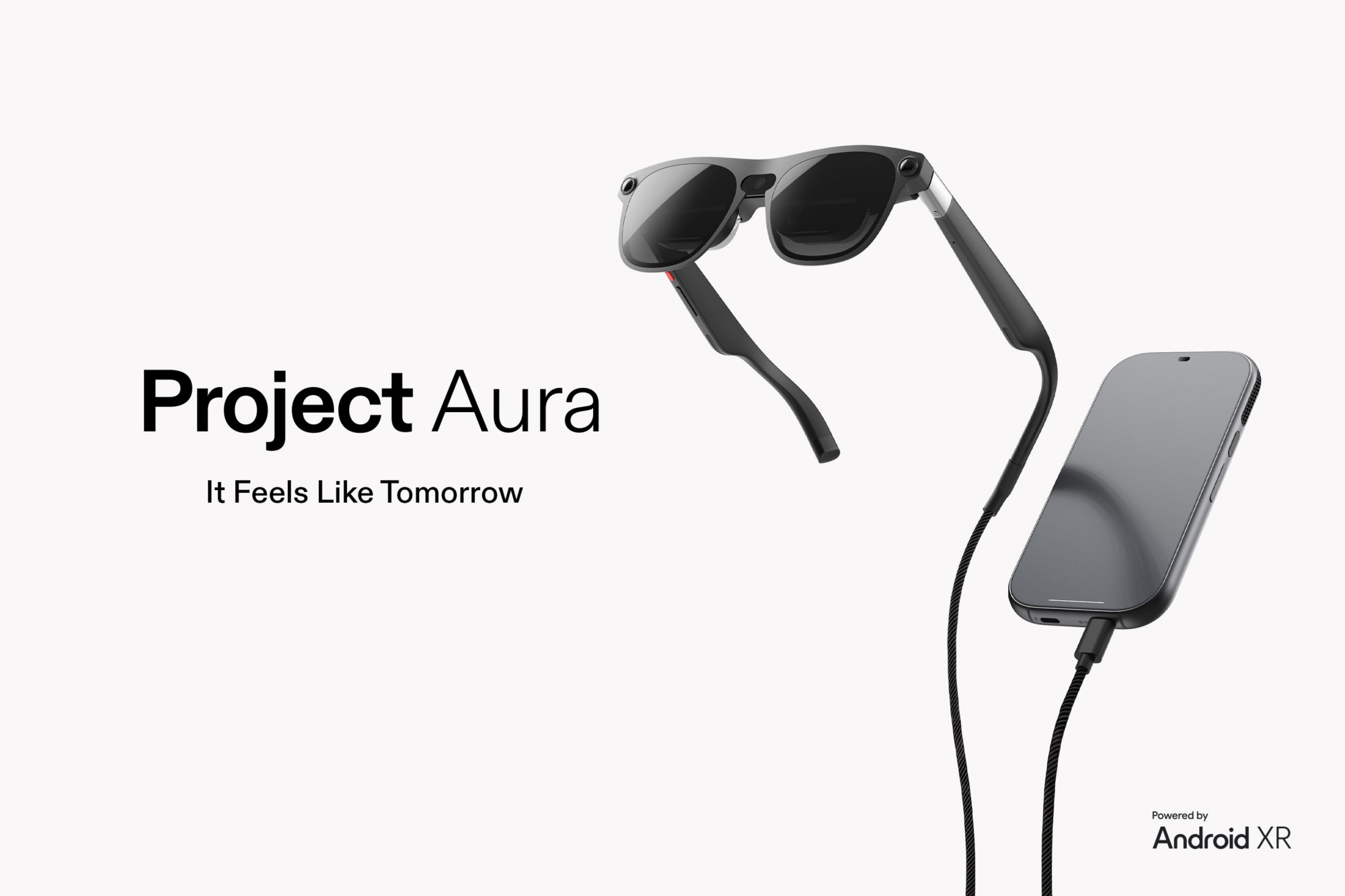
Built through a three-way collaboration between XREAL, Google, and Qualcomm, Project Aura runs Android XR on a Snapdragon processor and packs an OLED display with a 70-degree field of view — wide enough to be one of the most generous in its class. XREAL's existing lineup is well regarded for making XR hardware that's actually lightweight enough to wear for extended sessions, and that same design ethos is central to Project Aura.
The glasses connect via DisplayPort, which means they also function as an AR extension of a laptop or other compatible devices. That opens up a more practical use case beyond pure entertainment — a spatial computing layer that floats above your physical workspace.
What the I/O Demos Showed
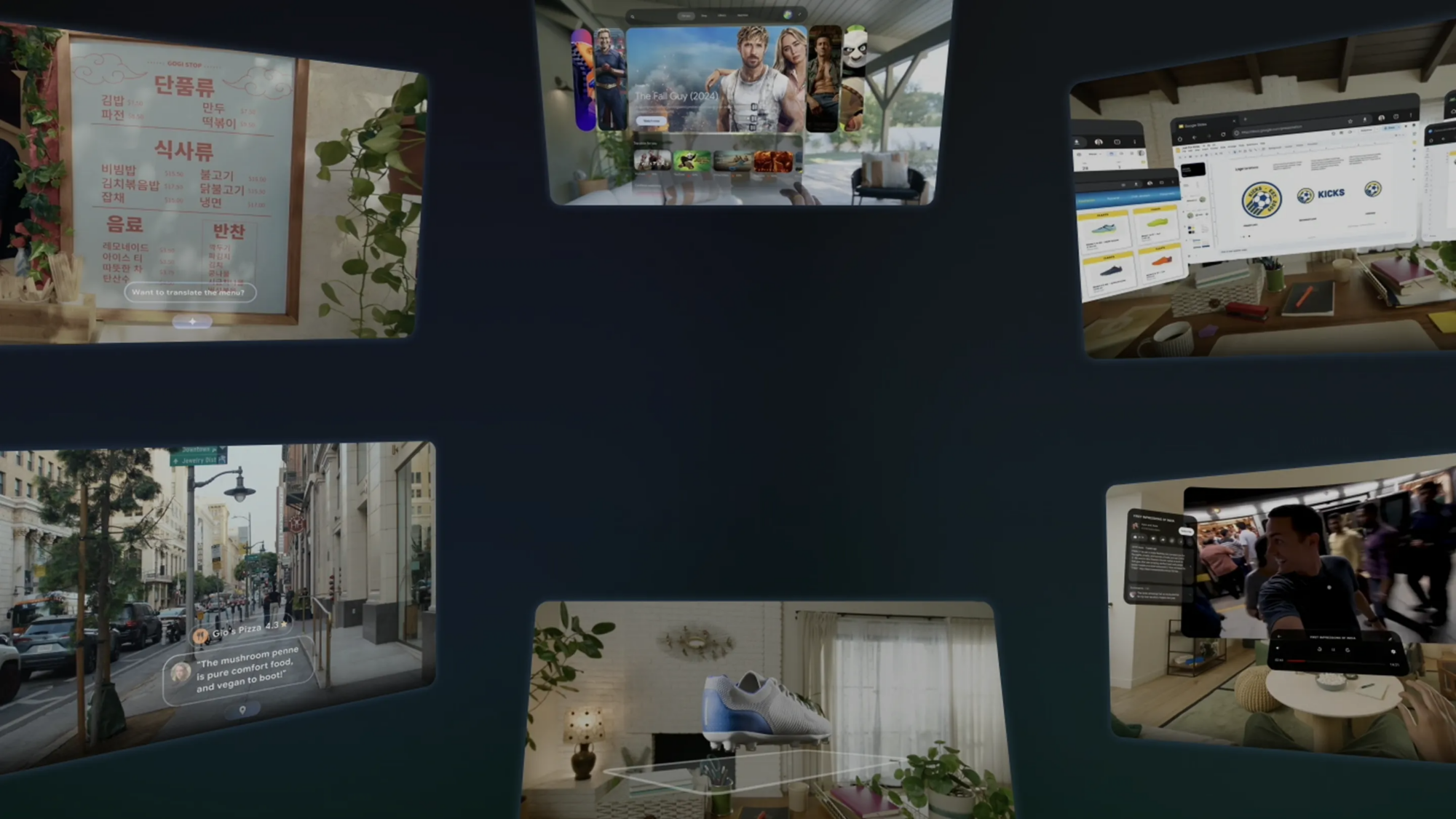
The demos at Google I/O covered a lot of ground. Attendees saw immersive Google Maps navigation rendered spatially, large-screen and multitasking mini-screen video experiences on the AR canvas, and YouTube 180- and 360-degree VR content in full 3D. There was also a WebXR painting app built with Vibe coding using Gemini, which is a neat flex given how it demonstrates the platform's developer accessibility.
The laptop DisplayPort demo was arguably the most interesting for practical users. Connecting Project Aura to a laptop auto-spatializes content and brings Gemini support into a three-dimensional AR workspace. That's a more immediately useful pitch than pure entertainment, and it positions Project Aura as a productivity device as much as a media one.
Developer Access Opening Now
Alongside the hardware announcement, XREAL and Google launched the Android XR Developer Catalyst Program. Select developers can apply now at g.co/dev/catalyst to receive Project Aura developer kits ahead of the general consumer launch, along with Android XR-specific tools and resources. XREAL says kits will be distributed in the coming weeks following application review.
It's a deliberate move to build out the app ecosystem before the hardware ships to consumers — the same playbook Google used with Android XR headsets.
When and What We Don't Know Yet

Project Aura is confirmed for a global launch in 2026, though a specific window hasn't been set. Pricing hasn't been shared either, and given that these are OLED display glasses with Qualcomm silicon inside, it's safe to expect a premium tier rather than a mass-market entry point.
What's clear is that the XR glasses space is suddenly a lot more interesting than it was six months ago. Between Project Aura's display experience and the Samsung/Google audio glasses, there are now two meaningfully different smart eyewear products arriving in the same window — serving different use cases at what will likely be different price points.