




In 1979, Ridley Scott unleashed a terrifying vision that forever changed cinema. “Alien” combined claustrophobic horror with groundbreaking sci-fi elements, creating an unprecedented cinematic experience. Audiences literally fled theaters screaming during the film's most shocking moments. How did this single film revolutionize two genres simultaneously and leave such an indelible mark on popular culture?
When “Alien” hit theaters in 1979, few could have predicted its monumental impact on cinema history. The film's perfect fusion of science fiction and horror created something entirely new—a space-set nightmare that played on primal fears while delivering cutting-edge visual effects. Viewers expecting another Star Wars-style space adventure instead received a claustrophobic thriller that shocked even the most hardened moviegoers. The film's impact continues to reverberate through cinema nearly five decades later, influencing countless filmmakers and spawning a massive multimedia franchise.
The perfect storm of cinematic terror
Ridley Scott's masterpiece emerged during a transformative period in American filmmaking. Fresh off the success of “Star Wars” (1977), science fiction was experiencing a renaissance, but “Alien” took the genre in a dramatically different direction. The film's revolutionary approach combined harrowing cosmic horror with industrial design aesthetics that felt both futuristic and uncomfortably lived-in.
The production assembled an extraordinary creative team. Swiss artist H.R. Giger designed the xenomorph creature, characterized by its distinctive biomechanical appearance – sexual, predatory, and utterly alien. His nightmarish vision gave the film a visual identity unlike anything audiences had seen before. Meanwhile, conceptual artist Ron Cobb created the utilitarian interior of the Nostromo spaceship, presenting space travel not as glamorous but as a blue-collar job in a floating factory.
The film's casting decisions proved equally inspired. Rather than selecting conventional action heroes, Scott assembled character actors who conveyed authentic working-class weariness. Sigourney Weaver's Ellen Ripley emerged as cinema's definitive female action hero – competent, intelligent, and determined to survive. This represented a significant departure from typical female characters in both horror and science fiction films of the era.
The film's marketing campaign brilliantly exploited audience anticipation with the tagline “In space, no one can hear you scream” – a promise the film would deliver on in shocking fashion. The studio strategically kept the Xenomorph's appearance largely hidden in promotional materials, maximizing its impact when it was finally revealed on screen.
The chest-burster sequence that traumatized viewers
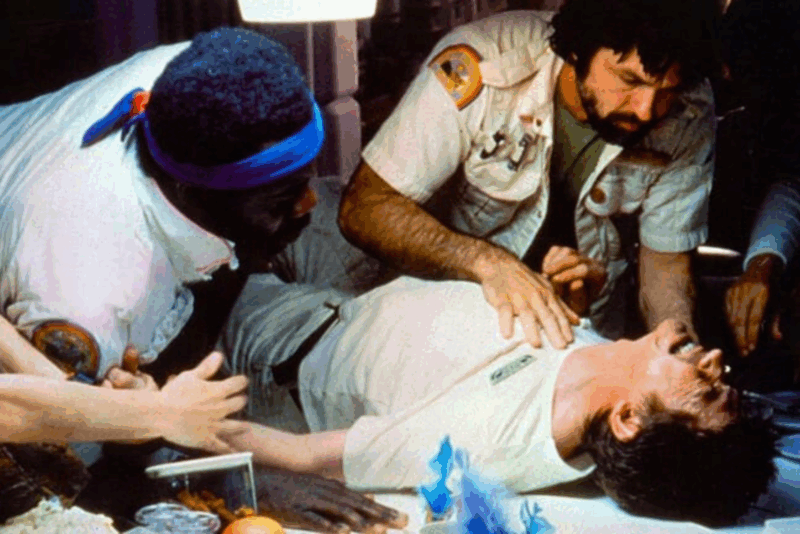
Nothing prepared audiences for the notorious chest-burster scene – arguably the most shocking sequence in horror film history. What began as a seemingly routine dinner scene following Kane's (John Hurt) recovery from his encounter with the “face-hugger” turned into cinema's most visceral nightmare. As Kane convulses in agony, a small alien creature violently erupts through his chest in a spray of blood and viscera.
The scene's impact was partly due to its brilliant execution. Scott intentionally kept most cast members in the dark about precisely what would happen during filming. Their reactions of horror and disgust were essentially genuine, adding authenticity to the sequence. Terry Rawlings, the film's editor, later recalled in “The Beast Within: Making of Alien” documentary that during early screenings, “People literally ran from theaters screaming.”
Studio executives initially misinterpreted these extreme reactions as a negative, and were concerned that the film was too disturbing. As Rawlings explained, “Management told us, ‘It's terrible. People are feeling sick; it's a disaster!” However, the filmmakers recognized these visceral responses as indicators of the film's effectiveness. “We just thought: ‘That's great!'” Rawlings noted.
The sequence represented a quantum leap in special effects artistry. Rather than relying on obvious puppetry, the production team created a seamless integration of practical effects and performer interaction that maintained the illusion of horrifying reality. This technical achievement helped cement the film's reputation for uncompromising terror.
A revolutionary approach to sci-fi storytelling
Beyond its shocking moments, “Alien” fundamentally reimagined the possibilities of science fiction cinema. Unlike optimistic space adventures like “Star Trek” or “Star Wars,” Scott presented a corporate-controlled future where human life holds less value than potential profit. The Nostromo crew discovers their company, Weyland-Yutani, deliberately exposed them to the alien life form, hoping to secure it as a biological weapon.
The film subverted genre expectations at every turn. Traditional horror relied on supernatural threats or psychologically disturbed humans. “Alien” introduced a perfectly evolved killing machine with no malice – simply a biological imperative. Its life cycle, from egg to face-hugger to chest-burster to adult xenomorph, represented a disturbing perversion of reproduction that played on deeply rooted fears.
Scott's directorial approach emphasized suspense over spectacle. Much of the film's terror comes from what remains unseen, with the xenomorph often hidden in shadows or glimpsed briefly. This restraint proved more effective than graphic gore alone, creating sustained tension throughout the film's runtime. The claustrophobic setting of the Nostromo amplified this effect, trapping characters with no possibility of escape or rescue.
The film also challenged gender conventions through its protagonist. Ellen Ripley wasn't designated as the hero from the outset – she emerges as the most capable survivor through intelligence and adaptability. This approach was revolutionary in 1979, establishing a template for female protagonists that continues to influence the filmmaking industry.
The lasting legacy across decades
What began as a standalone horror film evolved into one of cinema's most enduring franchises. “Alien” spawned three direct sequels, two prequels, crossover films with the Predator franchise, and numerous video games, comics, and novels. Each film in the main series took a different approach: James Cameron's “Aliens” (1986) emphasized action, while David Fincher's “Alien 3” (1992) returned to the horror roots.
The xenomorph itself became an iconic movie monster, instantly recognizable even to those unfamiliar with the films. Its distinctive design has influenced countless creature creations in subsequent decades. Meanwhile, Sigourney Weaver's Ellen Ripley redefined expectations for female characters in action and horror films, paving the way for future heroines.
The film's visual aesthetic has proven equally influential. The lived-in industrial design of the Nostromo created a template for believable future worlds that countless science fiction films have adopted. Giger's biomechanical design sensibilities continue to inspire artists across multiple media forms.
Nearly five decades after its release, “Alien” remains a masterclass in tension, world-building, and genre fusion. It's a perfect balance of psychological horror and science fiction spectacle that continues to attract new generations of viewers. Modern filmmakers regularly cite it as a primary influence, ensuring that its techniques and innovations remain embedded in the DNA of contemporary cinema.

