



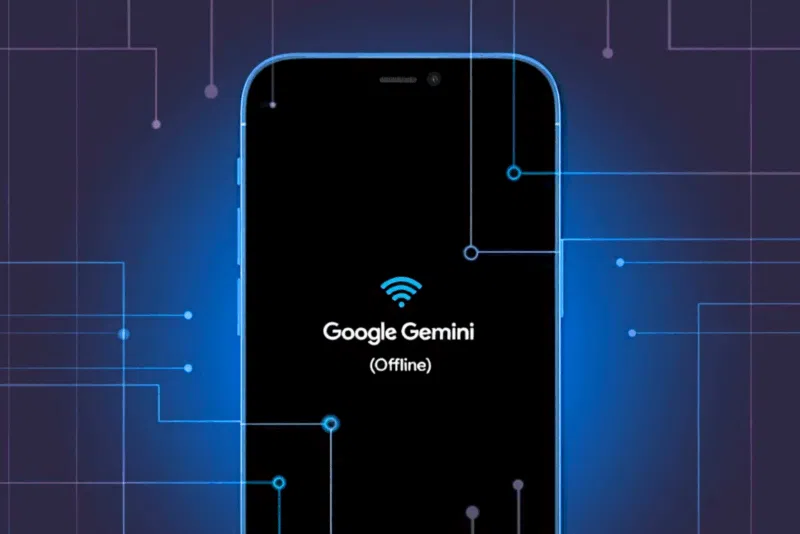
Google introduces a groundbreaking app that revolutionizes AI accessibility on Android devices. With AI Edge Gallery, users can now harness artificial intelligence capabilities without internet connectivity. This offline AI solution marks a significant shift from cloud-dependent models like ChatGPT and Gemini, making advanced technology accessible anywhere, anytime.
How Google AI Edge Gallery transforms offline AI experience
The artificial intelligence landscape is evolving rapidly with a game-changing development from Google. While powerful AI models like ChatGPT's GPT-4o and Google's Gemini 2.5 Pro require cloud computing and constant internet connectivity, Google has quietly launched an experimental application that brings AI capabilities directly to your Android device – no WiFi or mobile data required.
Google AI Edge Gallery, released on GitHub rather than through the traditional Play Store, allows users to download lightweight AI models that operate entirely on your device. This experimental app enables complete offline functionality for various AI applications once the initial model download is complete.
Unlike its cloud-based counterparts, Edge Gallery utilizes compact AI models specifically designed to function within the processing limitations of smartphones. These smaller models sacrifice some advanced capabilities but deliver remarkable performance considering they run solely on your device's hardware.
Lightweight AI models that work on your smartphone
The Edge Gallery application features several lightweight AI models including “Gemma-3n-E2B-it-int4” and “Qwen2.5-1.5B-Instruct q8” that users can install directly on their Android devices. These models represent a significant technical achievement in AI miniaturization.
Gemma, particularly noteworthy among these offerings, belongs to a family of AI models based on the same technology as Google's more powerful Gemini, but specifically engineered for minimal resource requirements. This design philosophy makes Gemma ideal for mobile devices with limited processing power.
The application's functionality extends beyond text-based interactions to include:
- Chatbot conversations without internet connectivity
- Image analysis and recognition
- Mathematical problem-solving from handwritten notes
- Information extraction from receipts and documents
- Creative assistance for various everyday tasks
Practical applications and device compatibility
Edge Gallery demonstrates impressive versatility despite operating offline. In practical scenarios, users can leverage these AI models for everyday assistance and creative problem-solving. For instance, the app can help generate healthy breakfast ideas, analyze handwritten math problems, or extract information from receipts – all without sending any data to cloud servers.
The performance of these AI models varies based on two primary factors:
| Factor | Impact |
| Device Processing Power | Newer, more powerful smartphones deliver faster responses and handle more complex requests |
| AI Model Size | Larger models offer more capabilities but require more device resources |
While currently available exclusively for Android, Google has confirmed that an iOS version is under development and will be released in the future. This expansion will bring offline AI capabilities to iPhone users as well, broadening the accessibility of this technology.
The future of on-device artificial intelligence
Google's AI Edge Gallery represents a significant step toward democratizing artificial intelligence technology. By enabling AI functionality without internet connectivity, this application addresses several critical concerns:
- Privacy enhancement by keeping data locally on your device
- Accessibility in areas with limited or unreliable internet connectivity
- Reduced dependency on cloud computing infrastructure
- Immediate response times without server latency
This development signals a potential shift in how we interact with AI technologies. While cloud-based models will continue to offer superior capabilities for complex tasks, on-device AI provides a complementary approach that prioritizes privacy, accessibility, and independence from network constraints.
As smartphone processing power continues to increase and AI models become more efficient, we can expect the gap between on-device and cloud-based AI capabilities to narrow. Google's experimental approach with Edge Gallery suggests the company recognizes the importance of developing both paths simultaneously, giving users more options for how they incorporate artificial intelligence into their daily lives.